On this page
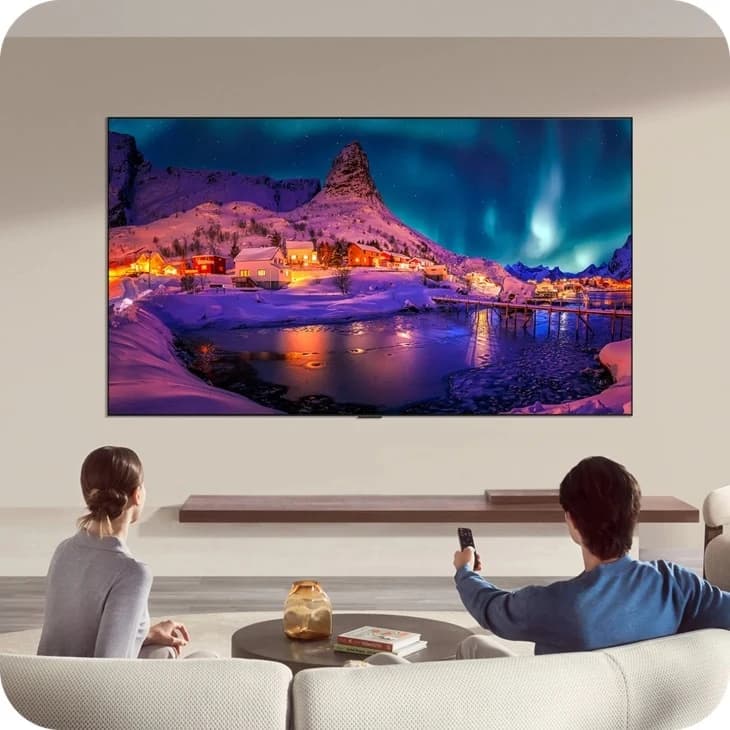
For a room with sun on the screen, a bright backlit LED TV is the safer pick. For a room that is bright only some of the day, an OLED with a strong anti-reflection screen is often enough.
What owners on Reddit say
Owners who chose OLED
"Started with the trusty plasma, OLED is alot brighter period. Not even on max setting, in a super bright living room." — one owner, r/4kTV (thread)
"I had previously a LG C1 65 in a bright room. Absolutely zero issues at all. Now have a C4 77 and it's even less of an issue!" — one owner, r/4kTV (thread)
"I have an LG C1 and an LG 34” OLED monitor in a bright room and it's 1000% fine. The brightness thing is overblown." — one owner, r/4kTV (thread)
"The vast majority of time that my TV spends in a bright room, I'm at work. I've never really understood all the fuss." — one owner, r/4kTV (thread)
"I guess I just miss the inky blacks and perfect viewing angles you get from OLED" — one owner, r/bravia (thread)
For a brighter LED TV
"My B4 is ok in a bright room but the brightness is at maximum so it probably shortens its lifespan. A good miniLED gets brighter with much less burn-in risk." — one owner, r/4kTV (thread)
"I'm buying right now in sunny space with a skylight and hours of direct sunlight on screen, had to rule OLED out completely and stuck deciding between Samsung r95h and Bravia 9ii" — one shopper, r/4kTV (thread)
"I'd go with the Bravia 9 ii if there's any direct or non direct sunlight on the TV during hours where you will watch it." — one commenter, r/4kTV (thread)
The pattern is clear. A room that is simply bright suits an OLED fine. A room with sun landing on the screen pushes people to a brighter LED TV.
What that means on a New York wall
First, the three kinds of screen
- OLED. Each pixel makes its own light. Black is truly black. LG and Samsung make the OLEDs we sell.
- Mini LED. An LCD screen lit from behind by thousands of very small LEDs. It can get very bright. Samsung's Neo QLED is the Mini LED line we sell (see every TV we sell).
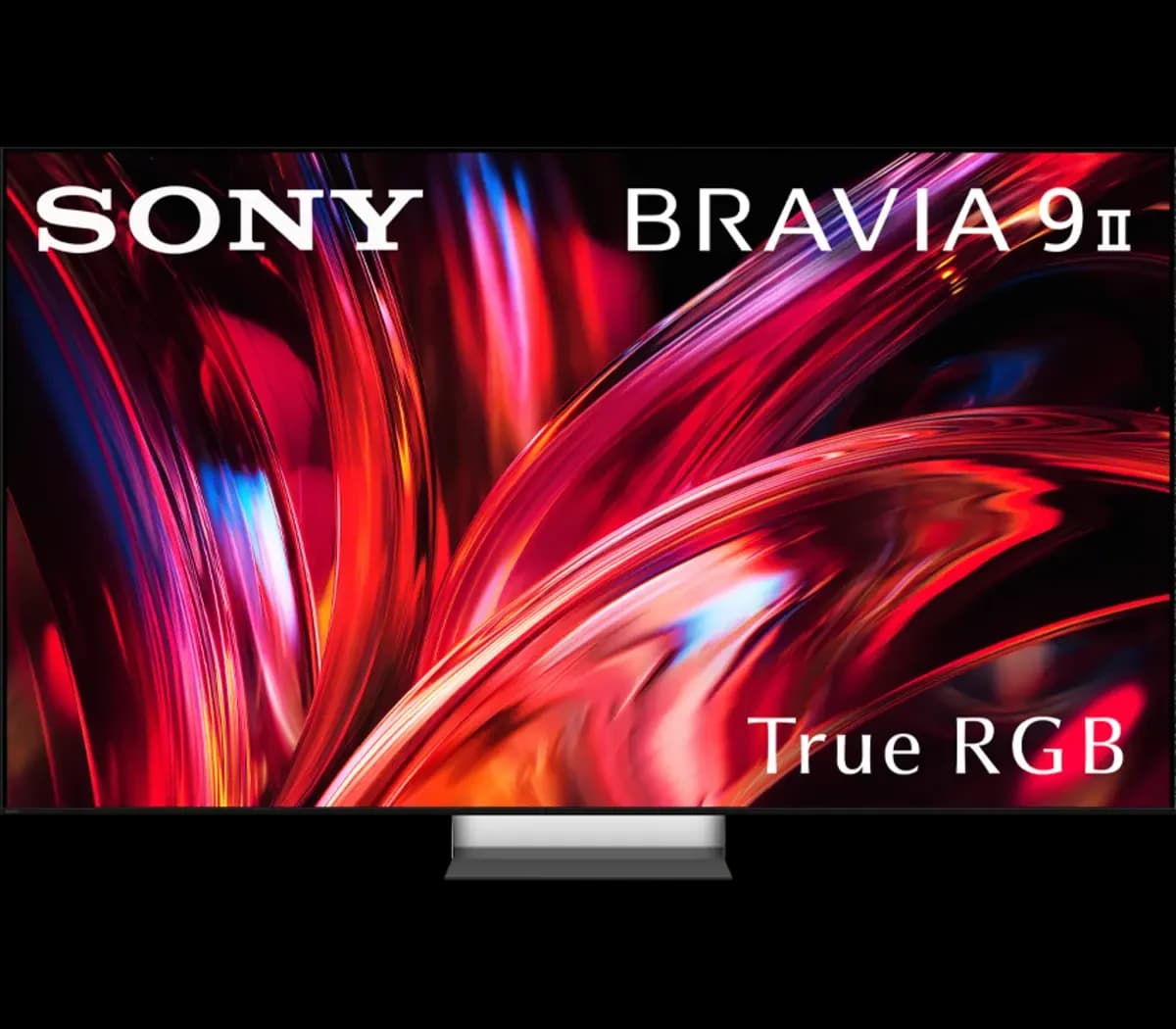
- True RGB. This is Sony's own name for its 2026 BRAVIA design. Sony's spec table lists an LCD screen with an RGB LED backlight: separate red, green and blue LEDs. Sony says this keeps color accurate at high brightness.
Mini LED and True RGB are both backlit LED TVs. That is why they can push out more light than an OLED across the whole screen.
Glare: the window opposite the TV
This is the worry owners raise most.
A big New York window across from the TV can turn a glossy screen into a mirror. You see the street, the lamp and yourself, not the film.
- The screen coating matters as much as the brightness. LG built the G6 with an anti-reflection coating to cut glare.
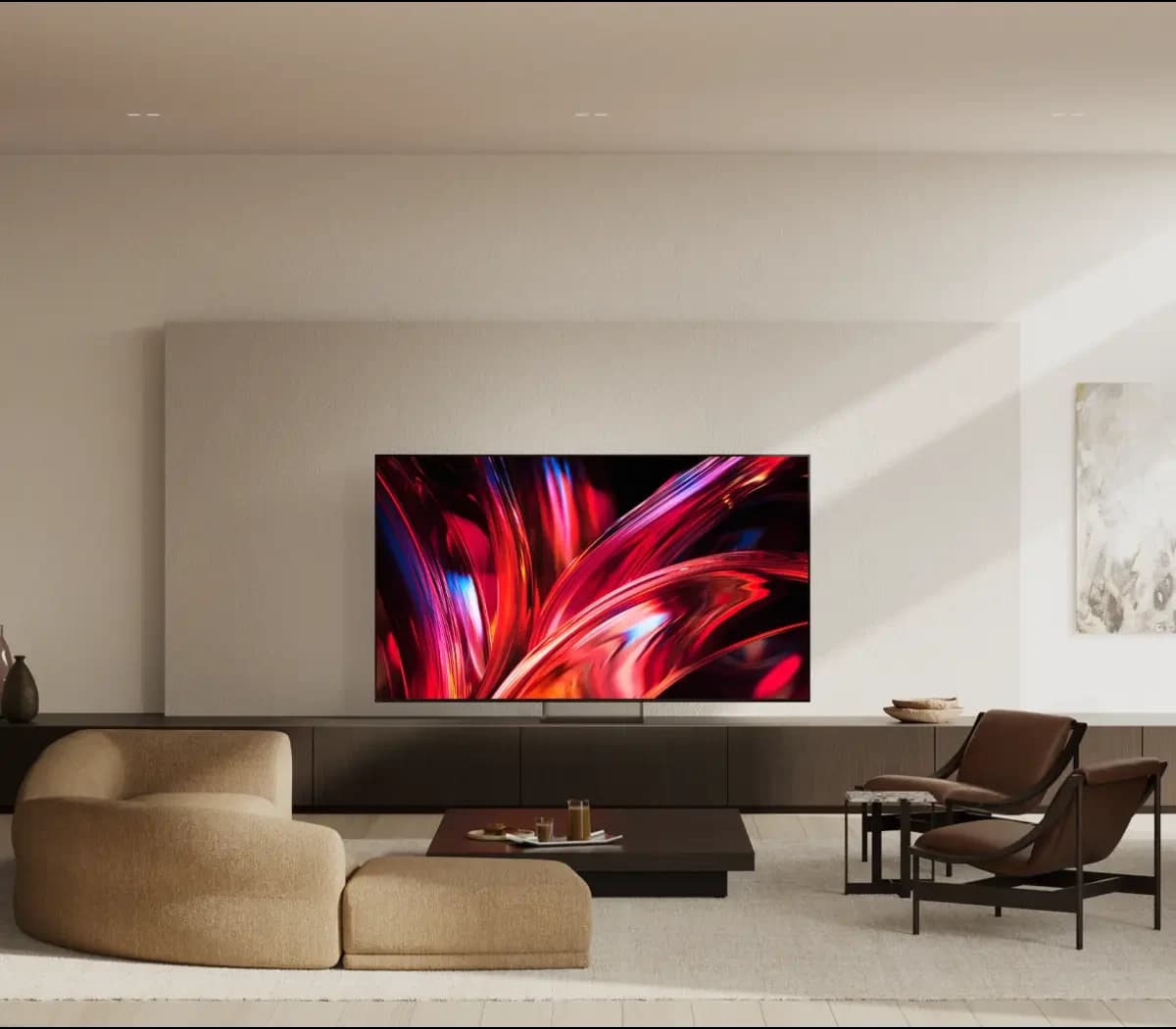
- Sony built the BRAVIA 9 II's anti-glare screen for bright living rooms. It is made to keep lamps and windows from showing in the picture. The one exception is the 115-inch, which Sony makes without that screen.
- A screen without that treatment reflects more. The BRAVIA 7 II does not get the 9 II's low-reflection screen, so a lamp or window facing it reflects more.
Before you choose, stand where the TV will go at the brightest hour of the day. Look at what is behind you.
Is OLED safe in a room with lots of windows?
For most rooms, yes. Many owners say the "bright room" fear is overblown.
The question is when you watch. If the room is bright while you are at work, and you watch at night, an OLED will look stunning when it counts.
If you watch the game at noon with the blinds open, that is a different room.
Will daytime TV look washed out?
It can. An OLED that looks perfect at night can look flat with the afternoon sun in the room.
A backlit LED TV like the BRAVIA 9 II keeps its brightness across a full white screen, where an OLED has to dim. That is the difference you see on a bright sports field or a snowy scene in daylight.
Direct sun on the screen
This is where owners draw the hard line. One shopper with a skylight ruled OLED out completely.
If the sun lands on the screen for hours, choose a bright backlit LED TV with an anti-glare screen. Or move the TV to a wall the sun does not reach.
What you give up with a backlit LED TV
The LED side is not perfect. Be clear about the trade before you buy.
- Side seats. From the side, an OLED still holds its color and contrast better. Sony's X-Wide Angle Pro helps, but the OLED still wins.
- Bright objects on black. A faint glow can show around bright objects in dark scenes on the BRAVIA, most visible from an angle.
- Depth and weight. A backlit TV is thicker and heavier than an OLED. The 85-inch BRAVIA 9 II Pro weighs 106 lb without its stand (Sony).
Burn-in
Burn-in is a real OLED risk. A static image left on screen for long periods can mark it. Score bars and channel logos are the usual cause.
It matters for all-day sports and news. It matters far less for films and shows.
LG backs the G6 with its OLED Care+ 5-year limited panel warranty. Year 1 covers parts and labor. Years 2 to 5 cover the panel and parts. LG's terms do not say whether burn-in is covered, so read them before you buy.
The BRAVIA 9 II is an LCD, so it cannot burn in the way an OLED can. If that worry would stop you enjoying the TV, that peace of mind is worth something.
The wall itself
Whatever you choose, the wall decides how clean it looks.
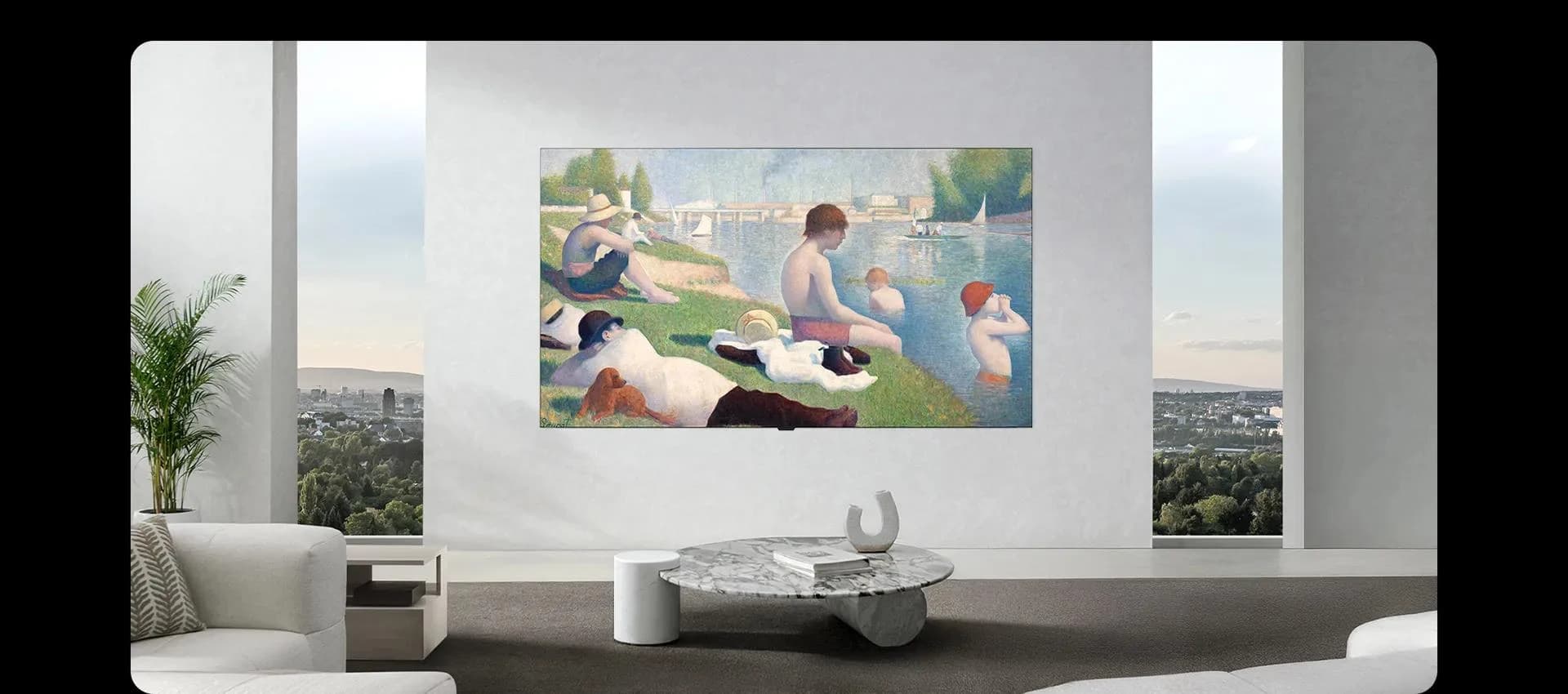
- The LG G6 comes with a flush wall mount in the box and sits about 1 inch from the wall.
- A BRAVIA comes with a stand, not a wall bracket. The bracket is a separate Sony accessory. We bring mounting hardware for your wall type.
- We hide the cables. You see the TV, not the wires.
- Some New York walls have metal studs. We plan the hardware for the wall you have.
TV mounting starts from $175. The booking page shows your estimated total before you submit your booking request.
Brightness, gaming, size and value
Why a backlit TV stays bright and an OLED dims
This is the real difference between the two kinds of screen.
An OLED makes light in each pixel. It has a limit on how much power the whole screen can use. When a small part of the picture is bright, like a candle or the moon, that part can get very bright. When most of the screen is bright, like a snowy street or a sunlit football field, the OLED lowers the brightness of the whole picture.
A backlit LED TV has a separate light behind the screen. That light is built to run bright across the whole panel. So a full white or very bright scene stays bright.
There is a cost. The backlight is split into zones, and each zone lights many pixels at once. A bright object on a black background can spill a little light into the dark area around it. That is the faint glow in the section above. An OLED controls each pixel on its own, so it has no glow.
The picture mode matters too. The brightest mode on any TV looks less natural. Many people use a brighter mode in the day and a calmer one at night.
Gaming: what refresh rate means
Refresh rate is how many times each second the screen draws a new picture. A higher number means smoother motion, but only when the game sends that many frames.
- The LG G6 supports up to 165Hz. That extra headroom matters most for a gaming PC connected to the TV.
- The BRAVIA 9 II runs at a native 120Hz. That covers what a current console sends at its smoothest settings.
For a console player, both TVs move smoothly. For a PC player who wants every frame, the G6 has the higher limit.
One OLED note for gamers: a game's health bar or map stays in the same spot for hours. That is the kind of static image that can cause burn-in, so vary what you play. LG's OLEDs also have their own care features. One example is Pixel Refresher, which LG now also calls Pixel Cleaning. LG says it runs automatically when you turn the TV off with the remote and leave it plugged in. LG says its OLED care technology helps protect against burn-in. That lowers the risk. It does not guarantee burn-in will never happen.
Size and seating distance in a New York apartment
One owner asked whether to return a 65-inch TV for a 77-inch. The top answer was short:
"Yes bigger is better" — one commenter, r/hometheater (thread)
The makers' own rules point the same way.
- LG's rule: measure from your seat to the screen in inches, then divide by 1.2. The answer is LG's suggested screen size.
- Sony's rule for 4K: sit about 1.5 times the screen's height away. Sony's own table puts an 85-inch TV about 5 feet from the seat.
A common New York example: the sofa sits 8 to 9 feet from the TV wall. That is 96 to 108 inches. Divide by 1.2 and LG's rule gives about 80 to 90 inches. That is the 77- or 83-inch G6, or the 85-inch BRAVIA 9 II.
In a very small room, a huge screen can feel like too much, so measure your seat and your wall first.
- The LG G6 comes in 55, 65, 77, 83 and 97 inches.
- The BRAVIA 9 II comes in 65, 75, 85 and 115 inches. The 115-inch does not have the anti-glare screen.
- Measure the way in. For 83 inches and up, check the elevator, the stair turns and the apartment door before you order.
See every size we sell on our TV sales page.
Is the extra brightness worth it?
A brighter TV is not a better TV in every room. It is better at one job: holding its picture when the room is full of light.
The honest answer depends on your room and on when you watch.
- Worth it: sun lands on the screen. If the sun hits the TV wall for hours, extra brightness and an anti-glare screen are what keep the picture visible.
- Worth it: you watch in the day with the blinds open. Daytime sports, news and cartoons are where an OLED looks flattest and a backlit TV holds up best.
- Worth it: the TV is on all day with logos on screen. A backlit LCD takes the burn-in worry off the table.
- Not worth it: you watch mostly in the evening. With the lights low, an OLED looks its best, and its true black is the thing you notice.
- Not worth it: your seats are spread around the room. From the side, an OLED keeps its color and contrast better.
- Not worth it: a bedroom or a dark media room. There, black matters more than extra light.
Many rooms sit in the middle: bright in the afternoon, dim at night. For those, an OLED with a strong anti-reflection screen, like the LG G6, is often enough. If you are still unsure, look at the room at the hour you watch most, not the brightest hour of the day.
How to choose
Pick an OLED, like the LG G6, if:
- You watch mostly in the evening or with the blinds down.
- Your seats are spread out, and people watch from the side.
- You game on a PC and want the G6's support for up to 165Hz.
- You want the deepest black and a TV that sits about 1 inch from the wall.
- You watch a mix of films and shows, not the same channel logo all day.
Pick a bright backlit LED TV, like the Sony BRAVIA 9 II, if:
- Sun lands on the screen for part of the day you watch.
- You watch sports and news in daylight with the blinds open.
- The TV stays on for hours with score bars or logos on screen.
- Burn-in would worry you every time you leave the TV on.
- You play on a console, where its native 120Hz covers what the console sends.
Then pick the size:
- Measure from your seat to the screen and use LG's rule: inches divided by 1.2.
- Most owners who regret their size wish they had gone bigger.
- For 83 inches and up, measure the elevator, the stair turns and the door first.
Still between two? Tell us which way your windows face, when you watch and how far you sit. We will help you choose.
Frequently Asked Questions
What is the best TV for a bright room?
For sun on the screen, a bright backlit LED TV with an anti-glare screen, such as the Sony BRAVIA 9 II. For a room that is bright but has no sun on the screen when you watch, an OLED with a strong anti-reflection screen, such as the LG G6, is often enough.
Is Mini LED or OLED better for a bright room?
A backlit LED TV, Mini LED or True RGB, stays brighter across the whole screen, so it holds up better in daylight. An OLED is often fine in a bright room if no sun lands on the screen and you watch mostly at night. An OLED still wins on black and on side viewing.
Is the Sony BRAVIA 9 II an OLED?
No. Sony's spec table lists an LCD screen with an RGB LED backlight, which Sony calls True RGB. None of the Sony TVs we stock is an OLED.
What does True RGB mean?
It is Sony's name for a backlight with separate red, green and blue LEDs. Sony says this keeps color accurate at high brightness.
Why does an OLED look dimmer in the day?
An OLED lowers its brightness when most of the screen is bright. A backlit LED TV keeps its brightness across the whole screen, so it holds up better against daylight.
Should I worry about OLED burn-in?
It is a real risk when a static image stays on screen for long periods. It matters most for all-day sports and news, and far less for films and shows. LG says its OLED care technology, such as Pixel Refresher, helps protect against burn-in. That lowers the risk, but it is not a promise. LG backs the G6 with its OLED Care+ 5-year limited panel warranty, but LG's terms do not say whether burn-in is covered, so read them before you buy. If burn-in would still worry you, the BRAVIA 9 II is an LCD, so burn-in is not the same risk.
Which is better for gaming?
For a console, both play smoothly. The LG G6 supports up to 165Hz, which helps most with a gaming PC. The BRAVIA 9 II runs at a native 120Hz. On an OLED, vary your games, because a health bar or map in one spot for hours is the kind of image that can cause burn-in.
What size TV should I get?
Use LG's rule: measure from your seat to the screen in inches and divide by 1.2. From 8 to 9 feet, that points to about 80 to 90 inches, so the 77- or 83-inch G6 or the 85-inch BRAVIA 9 II. Most owners who regret their size wish they had gone bigger. For a small room, the G6 also comes in 55 and 65 inches.
Is a big backlit LED TV harder to mount?
It is heavier and thicker than an OLED. The 85-inch BRAVIA 9 II Pro weighs 106 lb without its stand (Sony). A BRAVIA comes with a stand, not a wall bracket, so we bring mounting hardware for your wall type.
Can you hide the cables?
Yes. We hide the cables as part of the install, so you see the TV, not the wires.
Your worries, answered
Picking a TV for a bright room comes with a few real worries. Here is what we do about each one.
- "The sun will wash it out." Tell us which way your windows face and when you watch. We match the screen to the light in your room.
- "I will get burn-in." We explain how the way you watch changes the risk. If it would worry you, we point you to an LCD like the BRAVIA 9 II.
- "Will it fit, and will it get up the stairs?" Send us your seat distance and the size of the elevator, stair turns and door. We check the size before you order.
- "What about my wall and the cables?" We plan the hardware for the wall you have, metal studs included, and we hide the cables.
TV mounting starts from $175. The booking page shows your estimated total before you submit your booking request.