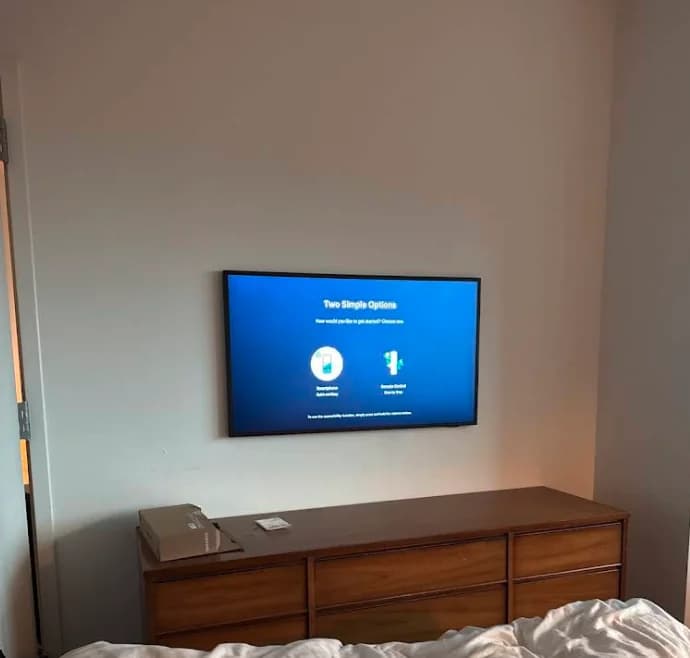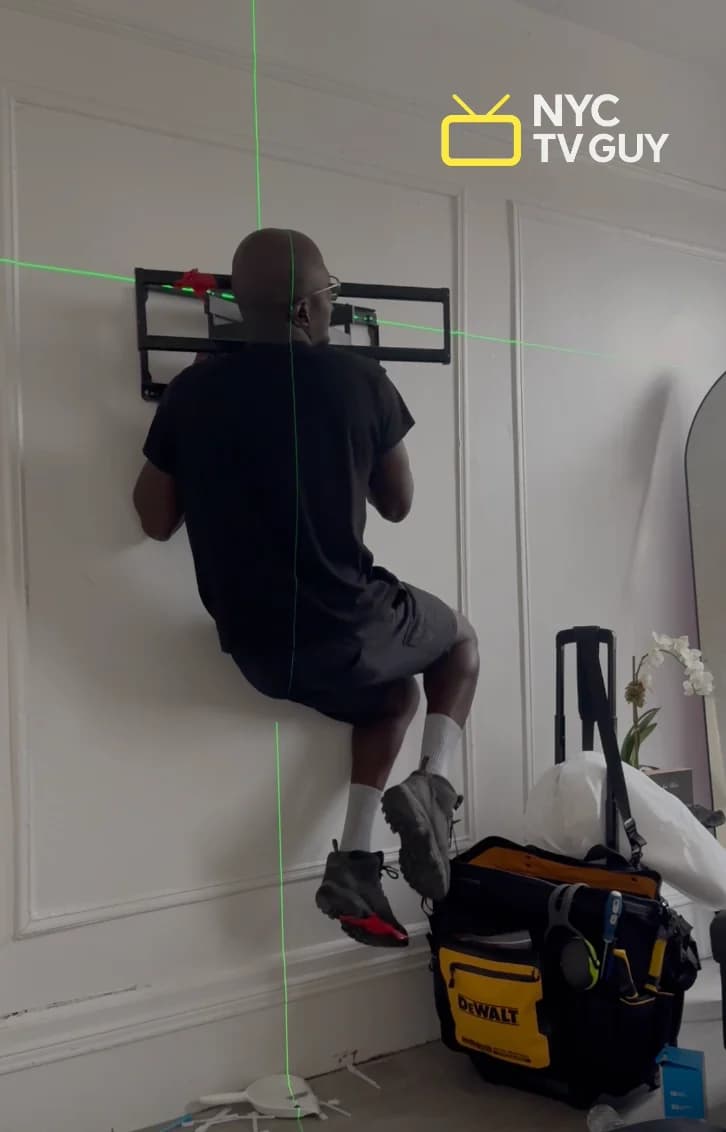
Mounting a TV in a New Jersey home is more straightforward than in a NYC apartment — but the tools still matter. Most NJ homes are drywall over wood studs, which is the easiest wall type to work with.
Who's this for: NJ homeowners or renters planning a DIY TV mount, or anyone wondering what a professional brings to the job.
This guide covers the essential tool kit for NJ homes, plus what changes in older houses, finished basements, and condos.
The short answer
- The core kit: stud finder, power drill, lag bolts, level, socket wrench.
- Skip drywall anchors entirely — even "heavy-duty" plastic anchors are not safe for TVs. Always mount into studs.
- Older homes (pre-1970): may have plaster walls instead of drywall — same complications as NYC apartments.
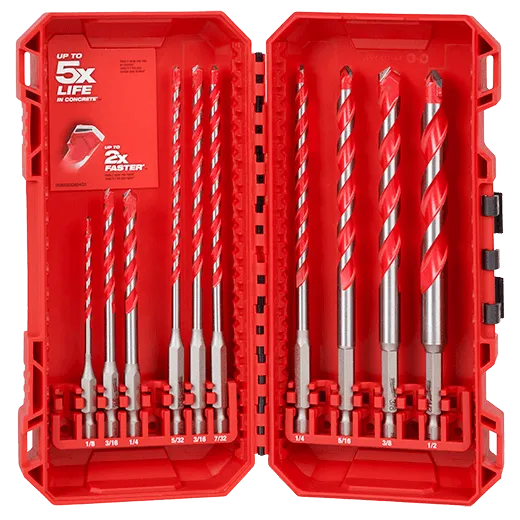
- Finished basements: exterior walls are concrete. You need a hammer drill and Tapcon concrete screws.
- Condos: check for metal studs — lag bolts won't hold in hollow metal.
- Book your NJ install and we'll show up with the right hardware for your specific wall type.
The Essential Tool Kit
1. Stud Finder
This is the most important tool. Your TV mount needs to be anchored into wall studs — the vertical wood framing members behind the drywall. A stud finder tells you exactly where they are.
What to look for:
- Edge detection and center-finding modes.
- Deep scan capability (useful in older NJ homes with thick or layered drywall from renovations).
- AC wire detection to avoid drilling into electrical wiring.
Pro tip: Studs in most NJ homes are spaced 16 inches apart. Once you find one stud, measure 16 inches left or right to find the next. Then verify with the stud finder before drilling.
2. Power Drill and Impact Driver
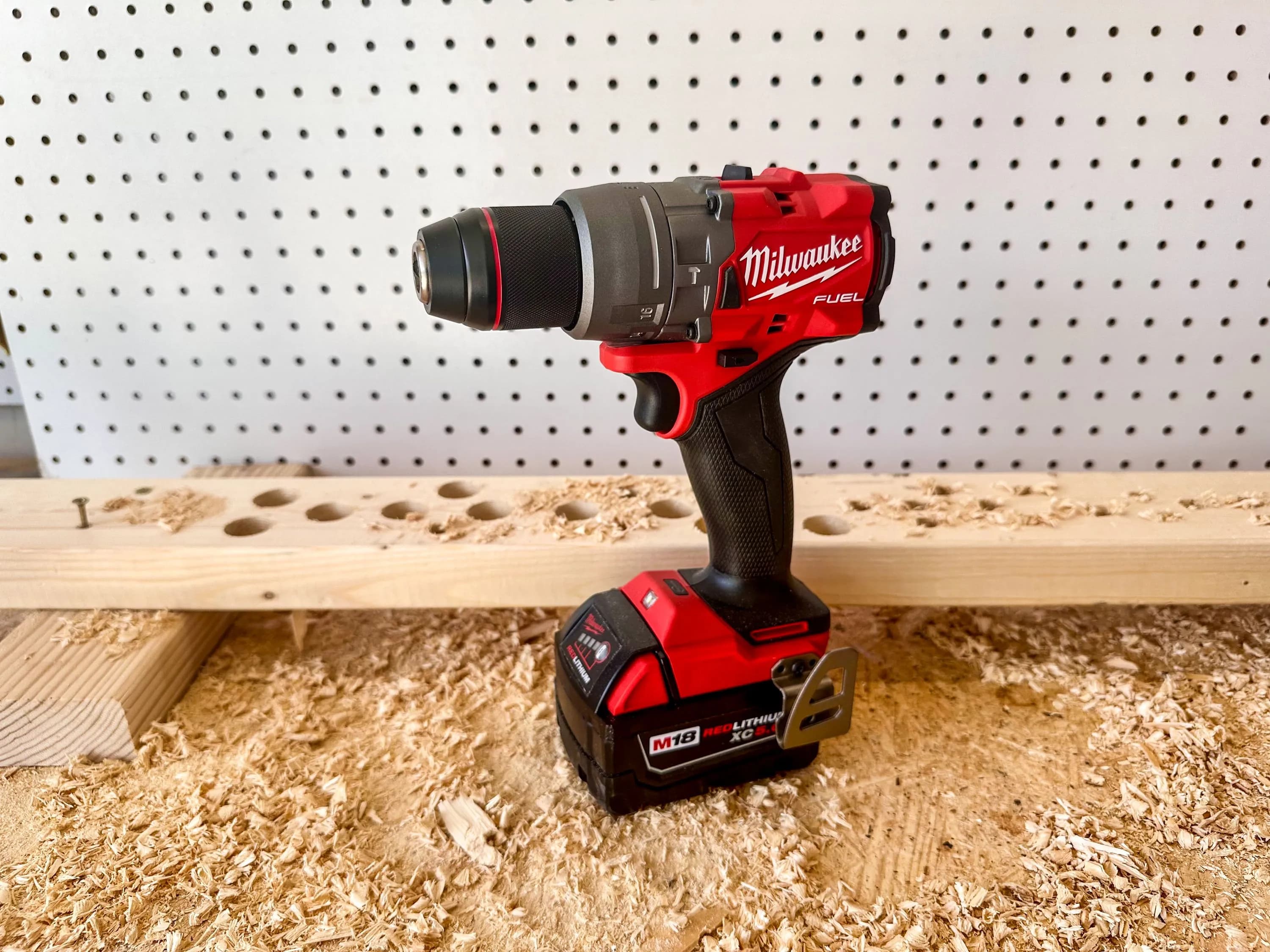
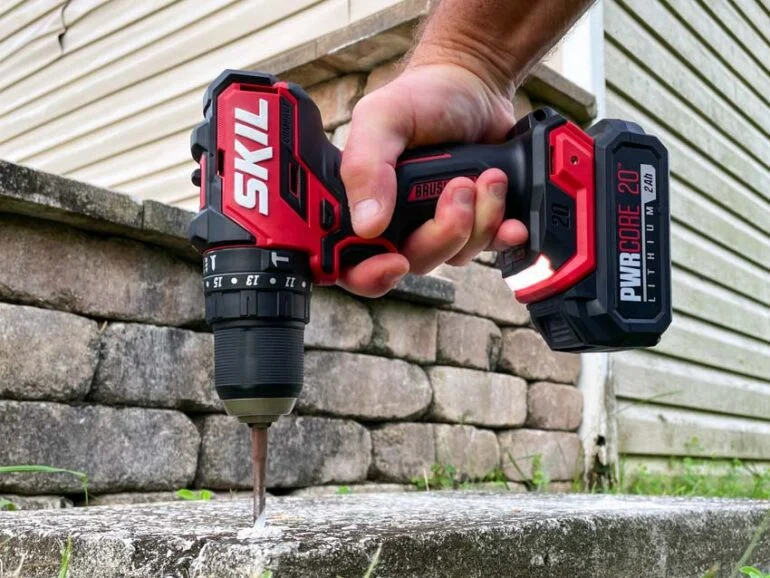
You need a drill for two things: drilling pilot holes and driving lag bolts.
- Drill for pilot holes — use a bit slightly smaller in diameter than your lag bolts.
- Impact driver for driving the lag bolts — the extra torque matters with 3"–4" lags going into hardwood studs.
A drill/driver combo works for both if you only own one tool. Make sure it's at least 18 volts.
3. Level
A torpedo level (9") works. A 24"–48" level is better. A TV that's even 1 degree off looks wrong every time you watch it. "Close enough" is never good enough here.
4. Lag Bolts and Hardware
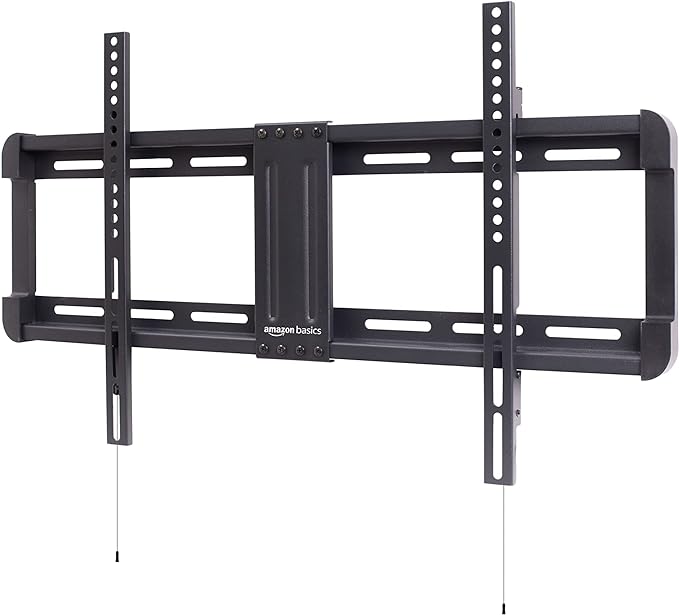
Most TV mounts come with hardware — but the included bolts are often too short or too small for a proper install.
- Lag bolts: 5/16" diameter, at least 3" long. For TVs 65" and up, use 3.5"–4" lags.
- Washers: flat washers between the bolt head and mount bracket distribute the load.
- Minimum penetration: the bolt should go at least 2" into the stud after passing through the drywall (about ½") and the mount plate.
5. Socket Wrench or Ratchet Set
Lag bolts need to be finished by hand. An impact driver gets them most of the way in, but finishing with a socket wrench gives you much better feel and prevents over-driving — which can split the stud.
6. Measuring Tape
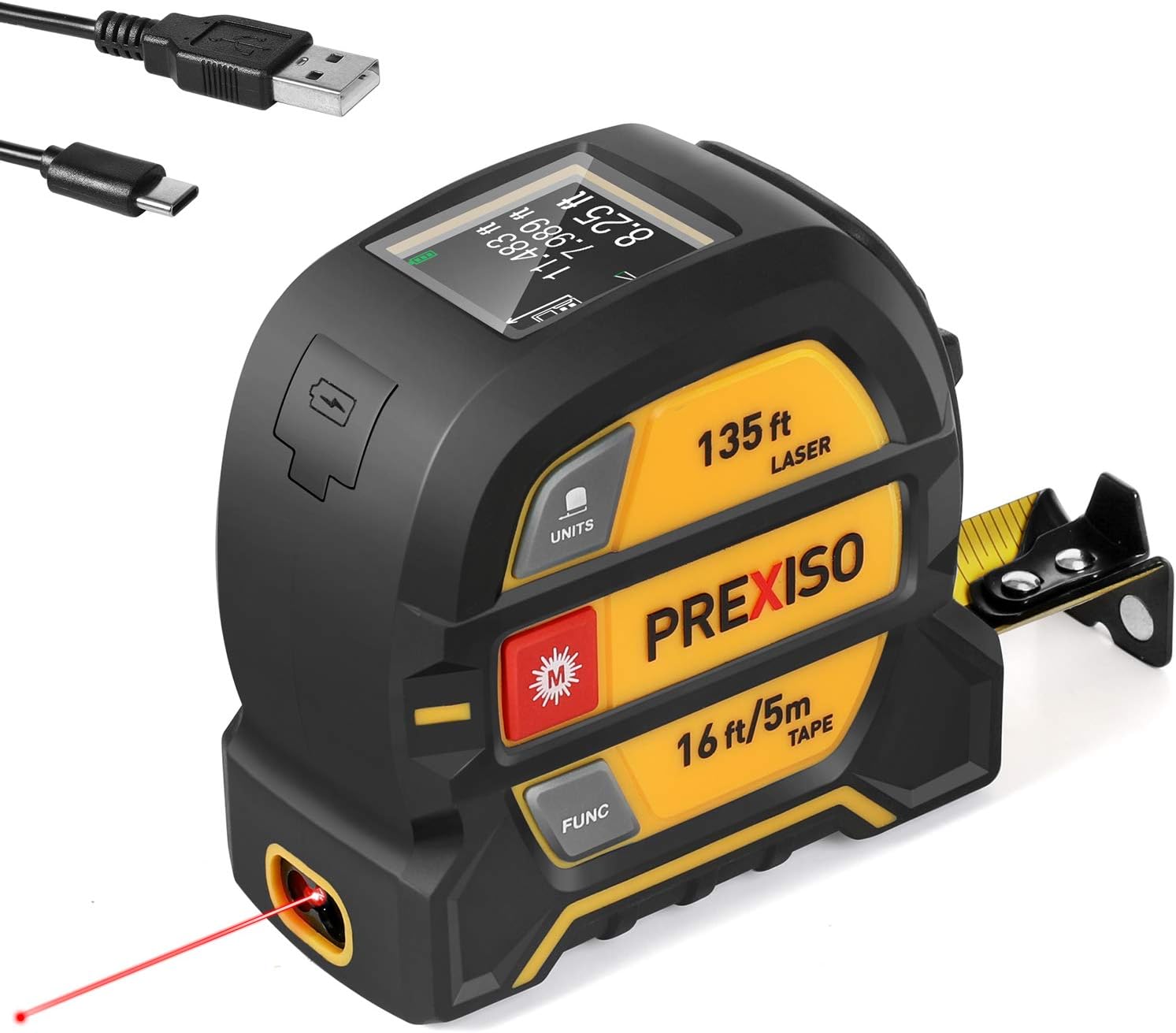
A 25-foot measuring tape covers stud spacing, TV placement, height from the floor, and hole spacing on your mount bracket.
7. Pencil and Painter's Tape
Mark your drill points with a pencil. Stick painter's tape to the wall first — pencil shows up better on tape than on a painted wall, and tape peels off cleanly when you're done.
NJ-Specific Considerations
Older Homes (Pre-1970)
Many NJ homes built before 1970 have plaster over wood lath instead of drywall. Plaster is harder and more brittle than drywall, and it changes a few things:
- Your stud finder may struggle. Use a strong magnet instead — it sticks to the nails fastening the lath to the studs and reveals their location.
- Pilot holes are mandatory. Plaster cracks easily if you drive a lag bolt without one. Drill slowly and use steady pressure.
- Plaster dust is aggressive. Lay down a drop cloth and wear a dust mask.
Split-Level and Bi-Level Homes
Split-level homes are everywhere in NJ — Bergen County, Morris County, Union County. Walls at split points often have steel beams or non-standard framing.
If your stud finder shows a stud that feels "too wide," or your drill hits hard resistance immediately, you may have hit a steel beam or double-stud header. For steel, you need self-tapping metal screws and a cobalt drill bit. This is where most DIY installs go sideways — it's worth calling a pro.
Finished Basements
Finishing a basement for a TV room is a classic NJ move. But basement walls behave differently:
- Exterior walls are concrete or cinder block behind drywall. You can't use lag bolts in concrete — you need concrete anchors (Tapcon screws or sleeve anchors) and a hammer drill.
- Interior partition walls are standard wood stud construction, same as upstairs.
- Furring strips: sometimes the drywall is mounted on thin 1×2 strips attached to the concrete. These are not strong enough to hold a TV. You need to anchor through to the concrete behind them.
Condos and Townhouses
NJ condo and townhouse developments from the 1980s–2000s often look like standard drywall, but some interior walls have metal studs. Metal studs require toggle bolt anchors — lag bolts won't hold in hollow metal.
Tools You Don't Need (But People Buy Anyway)
- Plastic drywall anchors: even "heavy-duty" versions rated for 75 lbs are not safe for TVs. A TV creates a lever arm — the weight pulls outward from the wall, not straight down, and anchors will pull through over time. Always mount into studs.
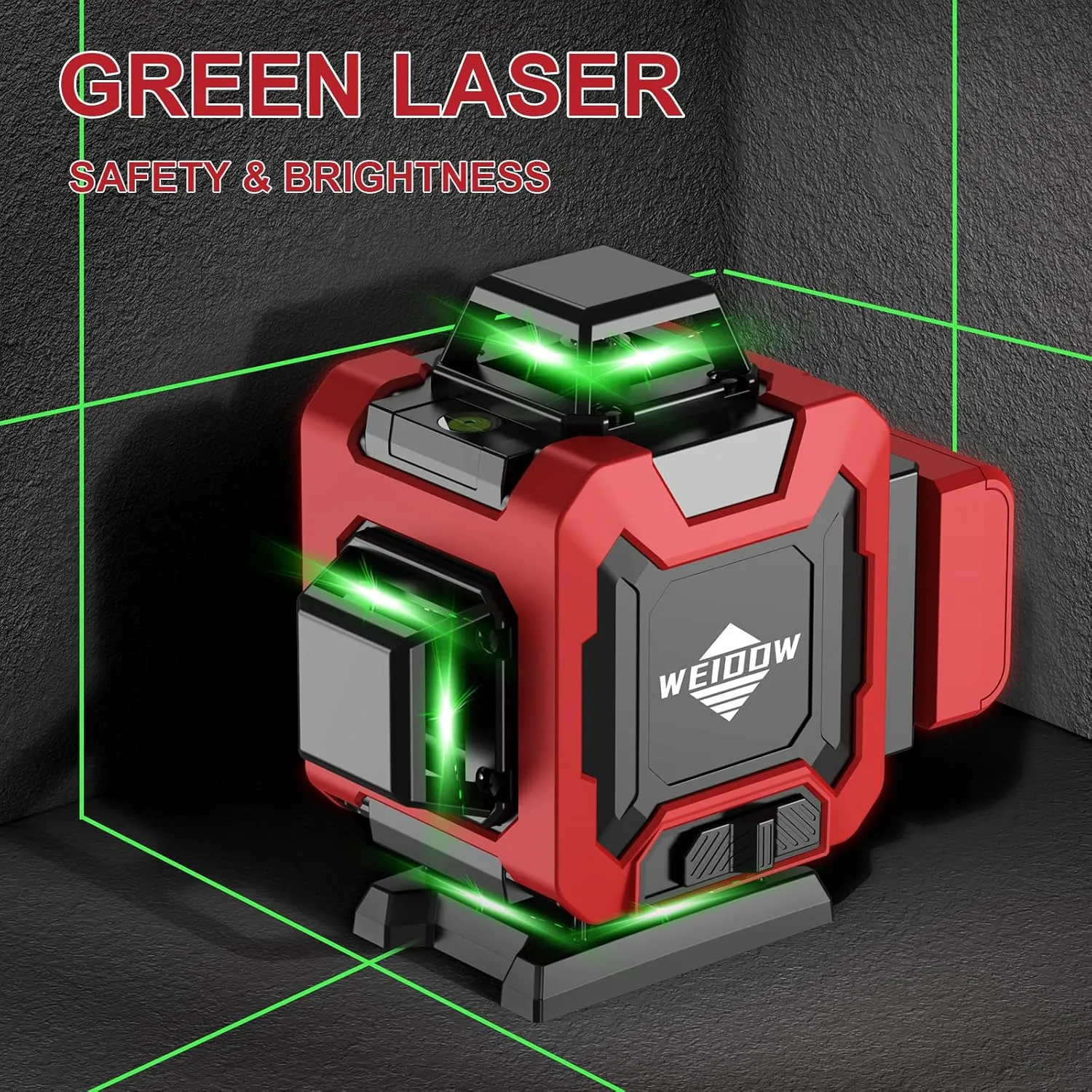
- Laser levels: a regular bubble level does the job perfectly for TV mounting. Save the laser for tiling.
- Cable fishing tools: only needed if you're running cables through the wall. See our guide on how to hide TV cables for what's actually involved.
When Professional Installation Makes Sense
In a typical NJ home with drywall over wood studs, a competent DIYer with the right tools can do this. It's not complicated.
But call a professional when:
- You don't know what's in your walls. Plaster, metal studs, steel beams, concrete — a wrong guess means holes in the wrong place and a TV that might not stay up.
- You want cable concealment. Running cables through the wall requires cutting access holes, fishing cables, and possibly installing a new outlet. That's electrical work. See how to hide TV cables for the full breakdown.
- The TV is above a fireplace. Masonry fireplaces need masonry bits and anchors. Gas fireplace surrounds have specific clearance requirements.
- You want it done in 45 minutes, not 4 hours. We do this every day. The install itself is fast. The part that takes DIYers forever is the measuring, second-guessing, and fixing mistakes.
We service all of northern New Jersey — Bergen, Essex, Hudson, Passaic, Morris, Union, Middlesex, and more. Browse our recommended tools and accessories or book your install — it takes about 2 minutes.
Frequently Asked Questions
Do NJ homes have the same wall types as NYC apartments?
Mostly no. NYC apartments are often plaster, brick, or concrete — which require specialized tools. Most NJ homes are drywall over wood studs, which is the straightforward case. But older NJ homes (pre-1970) can have plaster over wood lath, and finished basements often have concrete exterior walls. See the full NYC tools guide for the city-specific breakdown.
Can I use plastic drywall anchors instead of studs for a TV?
No. Even "heavy-duty" plastic anchors rated for 75 lbs are not safe for TVs. A TV on a wall creates a lever arm — the weight pulls outward from the wall, not straight down, and anchors will eventually pull through. Always use lag bolts driven into wood studs.
What size lag bolts should I use for TV mounting in NJ?
For most NJ homes with standard ½" drywall, use 5/16" diameter lag bolts at least 3" long. For larger TVs (65" and up), use 3.5"–4" lags for more stud penetration. Whatever you choose, the bolt should go at least 2" into the stud itself — not just through the drywall and mount plate.
What if my TV mount spans two studs but I can only find one?
Studs in most NJ homes are spaced exactly 16" apart. Once you find one stud, measure 16" in both directions to find the next. Verify with the stud finder before drilling. If the spacing seems off, you may have non-standard framing — knock on the wall and listen for the change in sound as a secondary check.
Do I need to notify my landlord before mounting a TV in a NJ rental?
Check your lease. Most NJ leases require you to patch holes before moving out, not to get pre-approval. Patch with DryDex spackling and paint, and most landlords won't notice. When in doubt, ask first.
Is professional TV mounting worth it for a NJ home?
For a simple drywall-over-wood-stud install with a standard fixed or tilt mount, a competent DIYer can handle it. But for anything unusual — plaster, concrete, metal studs, a fireplace wall, or a very large TV — professional installation saves you from a much more expensive mistake. We cover all of northern New Jersey and arrive knowing what's in the walls for every common NJ situation. Book your install or call (646) 912-5050.