
Owners on Reddit hide the cords to keep small children from pulling them, and one warns that stuck-on channels can take paint and drywall with them when removed. Read what owners say ↓
What owners on Reddit say
"I am looking to hide the cords for my mounted TV as I have two small children that are eager to yank on them." — one owner, r/hometheater (thread)
"You can get Legrand wiremold products for a channel mold to run the wire in. Then just paint the molding to match the wall color and you don't have to relocate anything." — one commenter, r/hometheater (thread)
"I did exactly that for all (well, most) of my speaker wiring. A couple years later, I tried to take a couple of them back off to lower the speakers slightly, and they wanted to rip the top layer of drywall with it." — one owner, r/hometheater (thread)
Hidden cables look cleaner and are safer around children. Plan the method for your wall before anything goes up.
Who's this for: Anyone with a wall-mounted TV and loose cables hanging down. Especially useful for NYC renters who can't make holes.
This post covers a paintable cable channel that sticks to the wall and routing cables behind your furniture — plus when each one makes sense.
On this page
Method 1: Cable Raceways (Cord Covers)
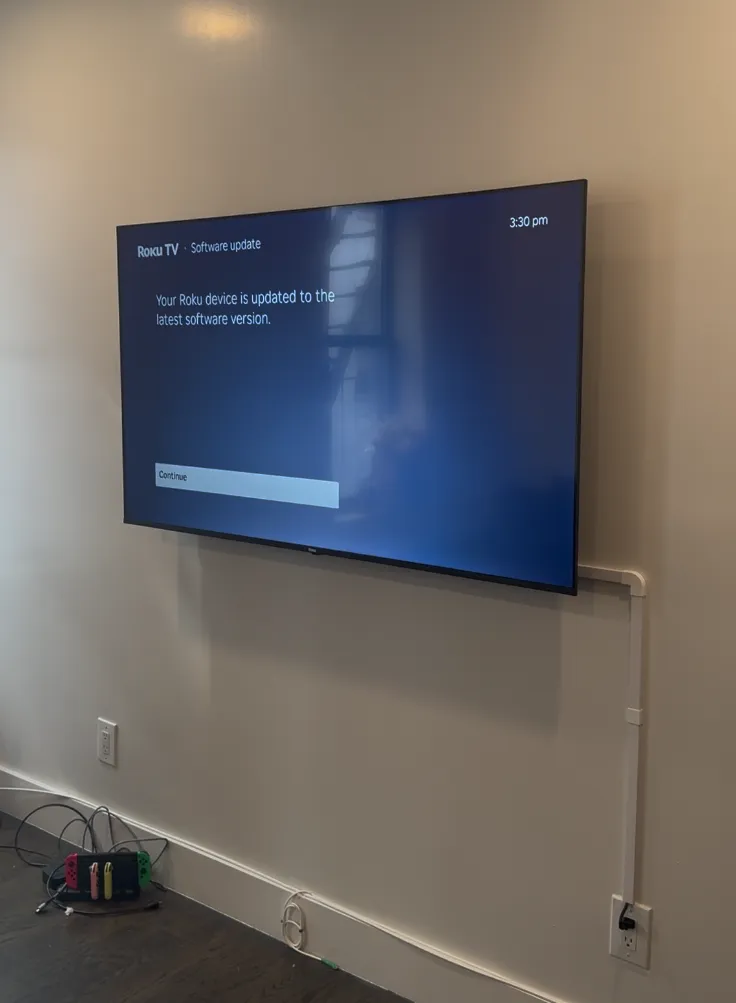
A cable raceway is a thin plastic channel that sticks to the wall and covers your cables in a clean straight line. No holes, no damage.
You run your cables from the TV down to the outlet or entertainment center — all tucked inside the channel. Snap the cover closed and it looks intentional. Paintable versions blend into the wall almost completely.
How to install one:
- Measure from the bottom of your TV to where the cables need to go (the outlet or floor).
- Cut the raceway to length — most cut easily with a hacksaw or scissors.
- Peel the adhesive backing and press it onto the wall.
- Lay your cables inside the channel.
- Snap the cover closed.
Pros:
- No holes in the wall.
- Fully removable — a hair dryer softens the adhesive when you're done.
- Paintable to match any wall color.
- One of the cheapest ways to tidy a full run.
Cons:
- Still visible up close (though far cleaner than loose cables).
- Adhesive can slip on heavily textured walls — use extra strips if needed.
Best for: Renters, smooth walls, fast results.
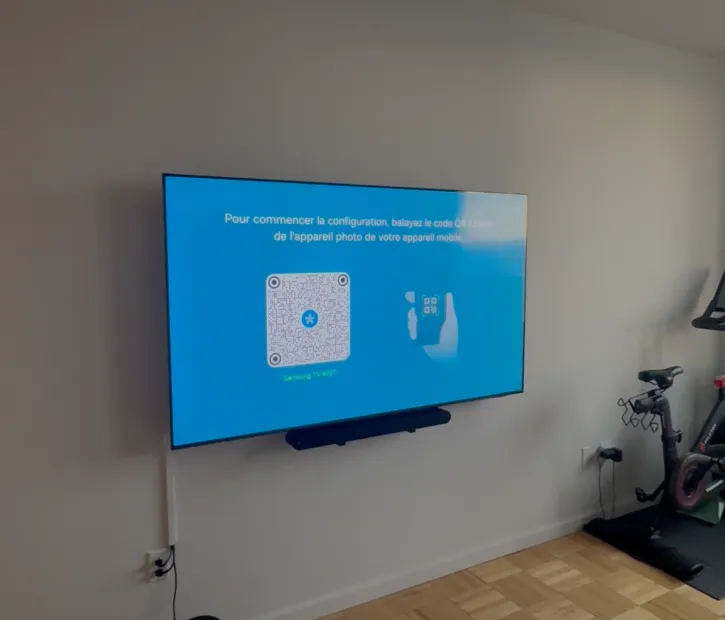
We install cable raceways as part of our TV Mounting + Cables Covered service. We bring the materials, cut and paint-match on site, and leave it looking seamless. Check our recommendations page for the cable covers we use.
Method 2: Behind-Furniture Routing
The simplest cable "hide" isn't really hiding at all — it's using furniture to block the view.
If your TV sits above a media console, bookshelf, or dresser, the cables only need to travel a short distance from the TV to the top of the furniture. Once there, they disappear behind it.
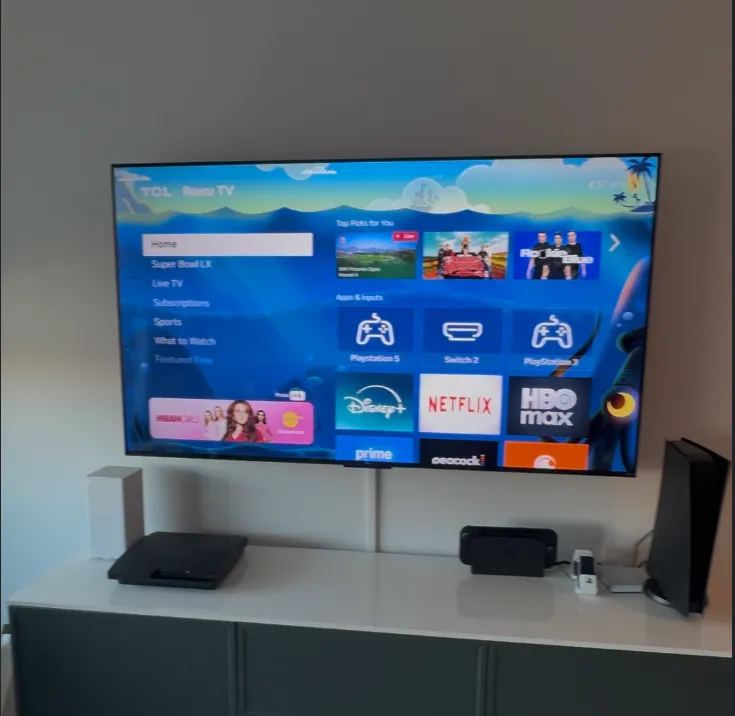
How to do it:
- Use small adhesive cable clips to guide cables straight down from the TV to the furniture.
- Once they reach the top, tuck them behind the furniture.
- Use cable clips or hook-and-loop ties to keep things tidy back there.
Pro tip: Leave 1–2 inches of clearance between the furniture and wall so cables can run without kinking.
Tip — fabric cable sleeves: a cable sleeve is a flexible fabric tube that bundles several cables into one neat column. It never touches the wall. The cables still show, but as one tidy line instead of a tangle, so it suits a short drop straight down to the furniture. Look for a split-style sleeve, so you can add or remove a cable without re-threading.
Best for: Any setup where furniture sits directly below the TV. Pair this with a TV floating stand for a clean media console look with zero visible wires.
Want Zero Visible Wires? In-Wall Wiring (Drywall Only)
If you can open the wall, the cleanest result is every cable run inside it, with a new power outlet directly behind the TV. Nothing is visible at all.
We offer this on drywall only. On plaster walls (common in NYC pre-war buildings), brick, and concrete, we hide cables with a clean surface cover rather than routing them inside the wall — that is the raceway in Method 1.
The power outlet behind the TV needs a proper in-wall rated power relocation kit, not a cord pushed inside the wall. Running a regular extension cord through a wall is a fire hazard and violates electrical code.
Our TV Mounting + Power Outlet + Cable in Wall service includes the TV mount, the new outlet behind the TV, and all cables hidden in the wall — starting from $599.
Which Method Is Right for You?
| Method | Wall types | Renter-friendly | Result |
|---|---|---|---|
| Cable raceway | Any | Yes | Clean line on the wall |
| Behind furniture (with a fabric sleeve) | Any | Yes | Organized, out of the viewing angle |
| In-wall wiring + new outlet | Drywall only | No | Zero visible cables |
- Renting, or plaster, brick or concrete walls? A paintable cable raceway gives the best result without wall damage.
- TV directly above a media stand? Behind-furniture routing, with a fabric sleeve, may be all you need.
- Drywall and want cables completely hidden? In-wall wiring with a new outlet behind the TV.
What We Recommend (and Install)
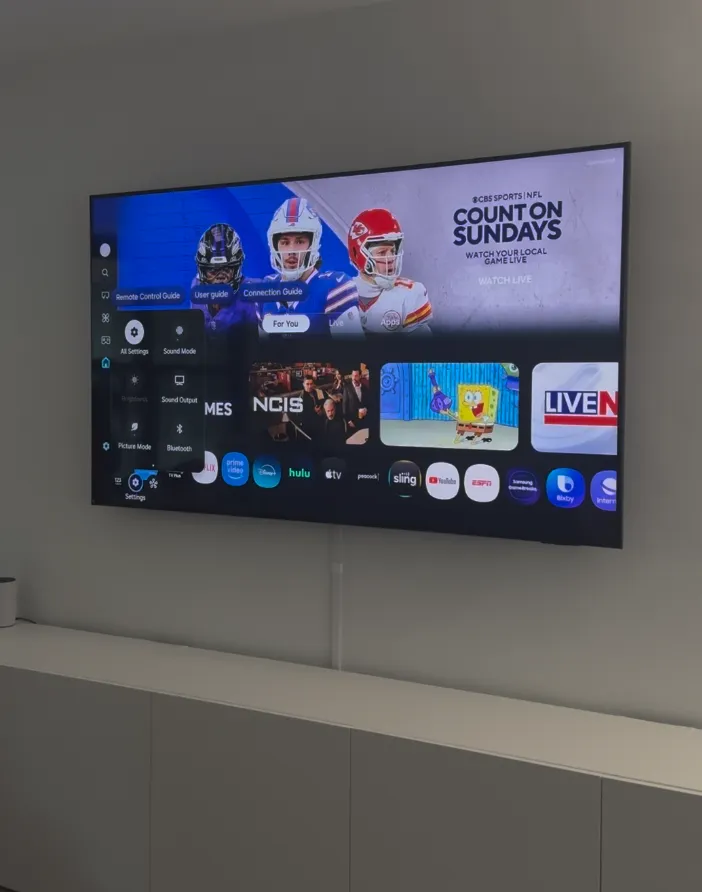
After mounting hundreds of TVs across NYC, cable raceways are the solution we install most for customers who can't cut the wall. They're fast, clean, renter-friendly, and look great in person. Most visitors won't even notice.
This is our TV Mounting + Cables Covered service starting from $199. It includes the TV mount and the raceway — we handle everything. Check our recommended products for what we use on installs, then book your appointment when you're ready.
Frequently Asked Questions
Can you hide TV cables in a rental apartment?
Yes. Cable raceways require zero holes and leave no damage when removed. They're the most popular option for NYC renters. If you have furniture below the TV, combining a raceway with behind-furniture routing gives you an even cleaner look. We install cable raceways as part of our service — book online and we'll bring everything needed.
How much does it cost to hide TV wires professionally?
Our TV Mounting + Cables Covered service starts from $199, which includes the TV mount installation and a cable raceway. Your final price depends on the services you choose and the distance from Midtown Manhattan — you'll see your estimated total before you submit your booking request.
What is the best way to hide TV cables on a brick or concrete wall?
Cable raceways are how we hide cables on brick and concrete — we use a clean surface cover there rather than routing cables inside the wall. A raceway painted to match the wall blends in well. For brick walls in NYC brownstones and pre-war buildings, this is what we install most.
Can I paint the cable raceway to match my wall color?
Yes. Most raceways come in white and are paintable. We use paint-grade versions on our installs and match the wall color on site. The result looks like part of the wall.
What if I have a textured wall?
The adhesive can struggle on heavily textured walls. In that case, use small screws to secure the channel instead. For renters who can't make holes, extra adhesive strips at each end usually hold it steady.
Can I hide cables on a swivel or full-motion mount?
Yes — it doesn't matter what type of mount you have. The cables just need to be long enough to move with the arm. We recommend at least 10-foot HDMI cables so there's enough slack for the full range of motion.
Is in-wall cable routing safe?
Yes, when done properly. Power cables need a proper in-wall rated power relocation kit and a new outlet — running a regular extension cord through a wall is a fire hazard and violates electrical code. Our in-wall power and cable service, from $599, handles this the right way.
Which service should I book?
If your walls are plaster, brick, or concrete — or you're renting — book Cables Covered (starts from $199, any wall). If you have drywall and want cables completely invisible, book Power + Cable in Wall (from $599, drywall only). Both include your TV mount. Your final price depends on the services you choose and the distance from Midtown Manhattan — you'll see your estimated total before you submit your booking request. Book an appointment →
Our TV mounting in NYC service offers cable options to suit your wall type.