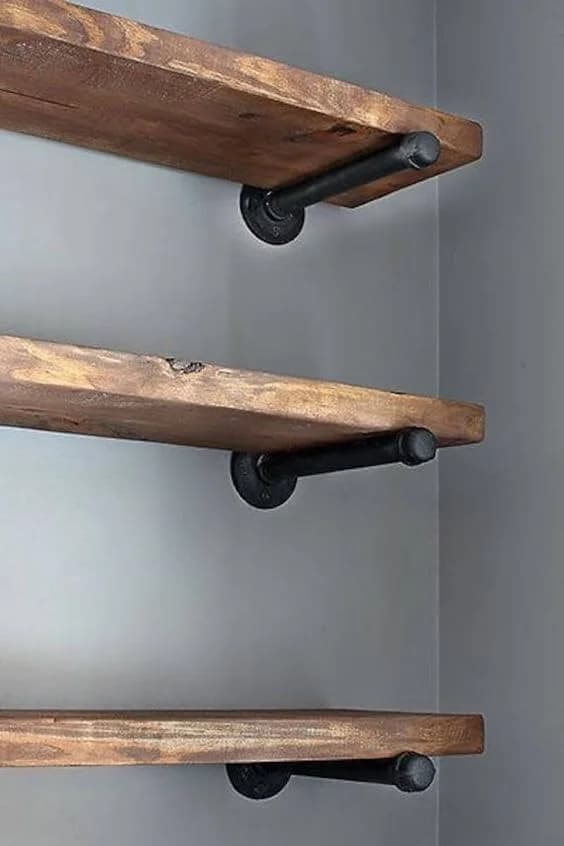
Hanging floating shelves comes down to one thing: matching the hardware to your wall. The wrong anchors mean shelves that sag, pull out, or crash down.
Who's this for: Anyone in NYC who wants floating shelves but isn't sure what works on their wall type — drywall, plaster, brick, concrete, or NYCHA.
This guide covers what works on each surface and the most common mistakes to avoid.
The short answer
- Drywall with wood studs → screw into studs (strongest hold, no anchors needed).
- Metal studs or no studs → toggle anchors (not cheap plastic ones).
- Plaster walls → L-shaped brackets; find the studs or lath; drill slowly.
- NYCHA walls (~½" surface layer over concrete) → L-shaped brackets, max ~8" shelf depth, light loads only — hire a pro.
- Brick or concrete → masonry anchors and a masonry bit; always drill into the brick, not the mortar.
- We install shelves on any wall type in NYC and NJ. Small items start at $50, large items at $150.
Types of floating shelves
There are two main shelf systems, and the installation is different for each.
Hidden bracket shelves are the most common — IKEA, CB2, West Elm. A metal rod or pin mounts to the wall, and the shelf slides over it. The bracket is invisible. These look clean, but all the weight stress concentrates at the wall attachment point. Getting the anchor right is critical.
L-shaped bracket shelves use visible brackets that support the shelf from underneath. The weight is distributed across the bracket, not a single pin — making them stronger and better for heavy loads or tricky wall types like plaster and NYCHA. Use at least three brackets for a standard shelf, two for a small one.
For plaster and NYCHA walls, use L-shaped brackets. The bottom support handles the weight better on these surfaces.
Hanging shelves on drywall
Drywall is the most forgiving wall type. Two things matter:
Wood studs: If you can hit the wood studs behind the drywall (typically 16 or 24 inches apart), use wood screws directly into the studs. No anchors needed. Strongest hold.
Metal studs: Common in newer NYC apartment buildings and renovated units. Standard wood screws won't hold in metal studs. Use toggle anchors instead.
No studs where you want the shelf: Use toggle anchors (also called butterfly anchors). They expand behind the drywall and distribute the load. Avoid cheap plastic drywall anchors for anything that holds real weight — those are for picture frames, not loaded shelves.
Hanging shelves on plaster walls
Pre-war buildings (built before roughly 1945) almost always have plaster walls — a hard outer layer over wood lath strips. It's not one solid material. It's layers.
What works on plaster:
- Stud mounting is still the best option if you can find the studs. Plaster can fool stud finders, so test with a small pilot hole first.
- Angled drilling helps anchors grip better — drilling at a slight downward angle catches both the plaster and the lath behind it.
- L-shaped brackets are the right call on plaster. Use at least three to spread the weight. Hidden brackets concentrate all the stress at one point, which plaster doesn't handle well.
Drilling tip: Put painter's tape over your drill mark before drilling. It reduces cracking as the bit enters the plaster. Go slow — rushing cracks plaster.
NYCHA housing — a different challenge
NYCHA apartments often have a thin surface layer (~½") over concrete or concrete block — so there's very little material for anchors to grip in the surface itself. Standard drywall anchors won't hold here. Concentrated weight can damage the wall.
Rules for NYCHA:
- L-shaped brackets, at least three. Bottom support distributes weight better than hidden brackets on thin wall surfaces.
- Keep shelves shallow — no deeper than about 8 inches. The deeper the shelf, the more leverage it puts on the wall when loaded.
- Keep the load light — books, plants, and small decor only. Not heavy items.
- Hire a professional. NYCHA walls are the one situation where we strongly recommend not doing this yourself. One wrong anchor and you're patching a wall that's hard to repair correctly.
Note: NYCHA walls are not the same as plaster — don't use the same approach for both. If you're unsure which you have, a pro can identify it before any drilling starts.
Hanging shelves on brick or concrete
Brick and concrete need masonry anchors and masonry drill bits. Standard drywall hardware won't hold — it's a completely different process.
Key things to know:
- Drill into the brick itself, not the mortar joints. Mortar is the weakest part of a brick wall.
- Use masonry drill bits matched to your anchor size.
- Drill at low speed with steady pressure. Don't use hammer drill settings unless your specific anchors call for it — percussion drilling can crack brick.
- Vacuum the hole after drilling. Dust inside the hole dramatically reduces how well the anchor holds.
With the right anchors and technique, brick and concrete actually hold shelves extremely well — stronger than drywall in most cases.
Getting them level
A shelf that's even 1–2 degrees off looks immediately wrong.
Single shelf: Mark one end point, then use a level to mark the second point before drilling. Don't eyeball it.
Multiple shelves at the same height: Use a laser level or snap a chalk line. Mark all bracket positions before drilling any of them.
Column of shelves: Measure from the floor to each shelf height. The floor itself may not be level (especially in older buildings), so a laser level set at a fixed height is more reliable than measuring from the floor.
After mounting the bracket: Check level again before adding the shelf. Brackets can shift slightly as you tighten the screws.
Common mistakes
Not finding the studs. Guessing is how shelves fall. Spend five minutes with a stud finder.
Using plastic drywall anchors for loaded shelves. Those cheap white anchors that come in shelf packaging are rated for a few pounds. Fine for a picture frame. Not fine for a shelf holding books or plants.
Wrong anchors for plaster. Drywall anchors in plaster often grip only the outer plaster layer. When it cracks — and it will, eventually — the anchor has nothing to hold. Use lath-compatible anchors or find the studs.
Overloading. Check your shelf's weight rating. The shelf-and-bracket system is often the weakest link, not the wall. Just because the wall can hold the weight doesn't mean the shelf can.
Mounting into mortar joints on brick walls. Mortar is the weakest part of a brick wall. Always drill into the brick itself.
When to hire a professional
We'd recommend hiring a professional for most shelf installations. Here's why:
- You're not sure about your wall type. Older buildings can have surprises — metal lath, multiple plaster layers, tile over plaster, or brick behind drywall. Drilling into the unknown creates expensive repairs.
- You're putting real weight on the shelves. The more weight, the more the hardware and technique matter.
- You're in NYCHA housing. Thin wall surfaces need careful anchoring and weight distribution.
- You're installing multiple shelves. One mistake early affects everything.
- You just don't want to risk it. There's no shame in paying for a job done right the first time.
We install small mounted items like floating shelves, framed art, and mirrors starting at $50, and larger mounted pieces starting at $150 — on any wall type. If you're dealing with tricky walls, check out our guide on mounting a TV without studs for more on plaster and non-standard wall situations.
Frequently Asked Questions
How much weight can floating shelves hold?
It depends on the shelf, wall type, and hardware. Most shelves come with a weight rating — follow it. Drywall with studs holds well. Plaster is manageable with the right anchors and L-shaped brackets. NYCHA needs extra care because the surface layer is thin. For NYCHA, use L-shaped brackets and keep the load light.
Can you hang floating shelves in an apartment without damaging the wall?
There's no way to hang a real floating shelf without drilling. Command strips and adhesive mounts have very low weight limits (typically 5–7 lbs) and aren't practical for shelves holding anything substantial. If you want a shelf that stays up, you need to drill. Patch the holes when you move out — it's routine. If you need help removing shelves and patching, we offer a dismounting and patching service.
Why do my floating shelves keep falling?
The two most common causes: wrong anchors for the wall type (especially plastic anchors in plaster) and overloading. If a shelf fell, inspect the anchor hole — if the plaster crumbled around it, you need stud mounting or L-shaped brackets with more anchor points. If the anchor pulled clean out of drywall, you need toggle anchors or a stud.
Do I need a stud finder for floating shelves?
Yes, always. Even if you end up using toggle anchors, knowing where the studs are tells you your strongest anchor points. Some stud finders also detect metal pipes and live wires — worth having before you drill.
Can floating shelves go on any wall?
Yes, with the right hardware — drywall, plaster, brick, concrete, even tile. The hardware and technique change with the wall type. The mistake people make is using drywall hardware on non-drywall walls. Match the anchor to the wall material and it will hold.
Floating shelves done right are one of the most useful upgrades in a small apartment. Done wrong, they're a hazard and an expensive wall repair. If you're not sure about your wall type or don't want to risk it, we're happy to handle it.
We install floating shelves, artwork, mirrors, and other mounted items on any wall type in NYC and NJ. Book your installation