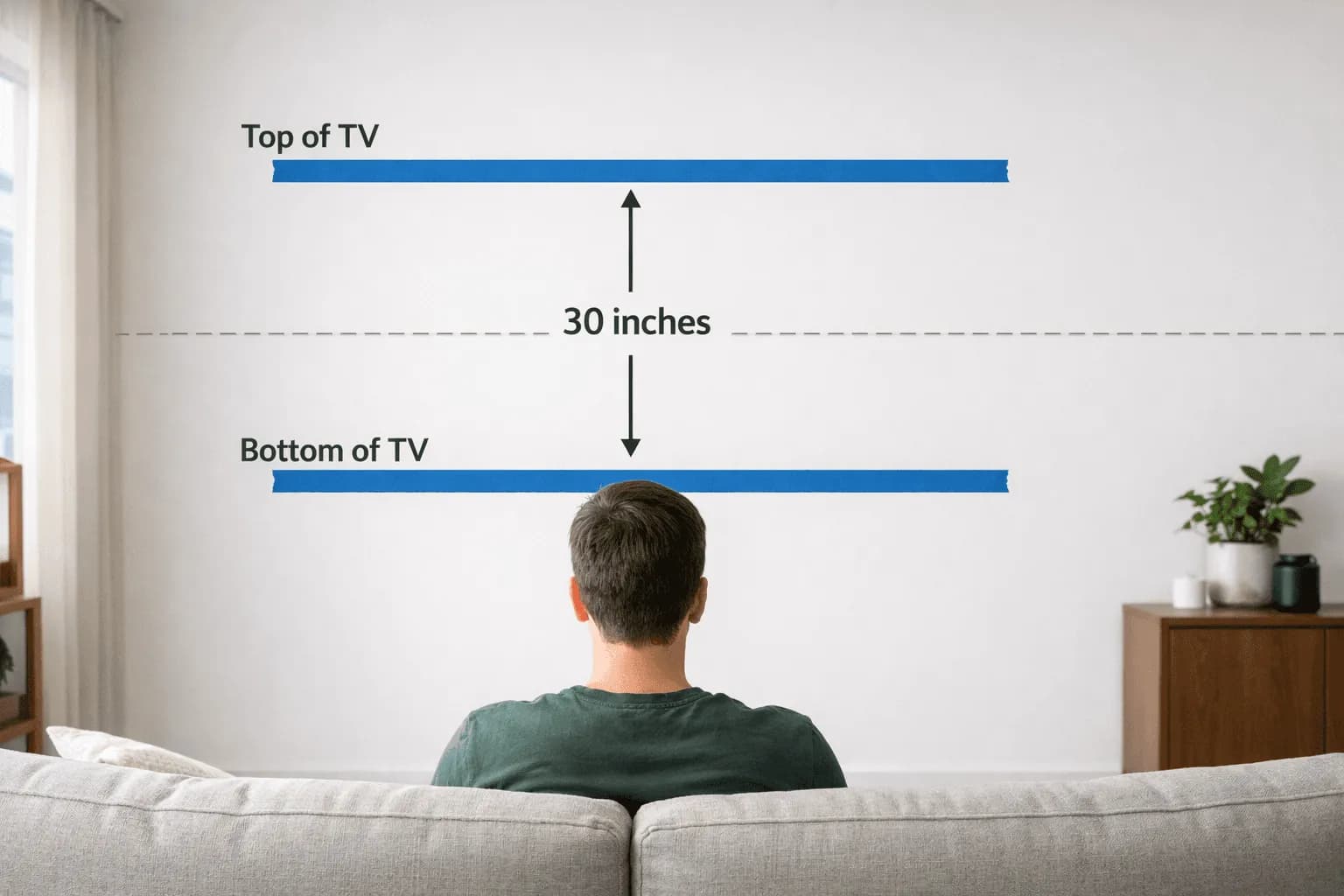
The "42-inch rule" fails in most NYC apartments. It was designed for a suburban living room — not a 400 sq ft studio with a couch 5 feet from the wall.
Is this for you? Anyone mounting a TV in a NYC apartment who wants to know the right height before drilling.
This guide explains why the standard rule breaks down here, how to find your actual ideal height in three steps, and when it's OK to go higher than the formula says.
The short answer
- The rule: Center of TV screen at your eye level when seated — roughly 38–44 inches from the floor for most people on a standard couch.
- NYC problem: Small rooms, odd furniture placement, and fixed obstacles (radiators, columns) mean the generic number rarely fits.
- Better approach: Measure YOUR eye level in YOUR seat, then calculate from there.
- Fastest answer: Use our TV mounting height calculator — enter your setup, get a number instantly.
- Ready to skip the math? Book your install and we'll set it to the exact right height for your space.
Why the 42-inch rule falls apart in NYC
The 42-inch rule was designed for a suburban living room: 8-foot ceilings, a couch 8–10 feet away, nothing competing for wall space. That describes approximately zero apartments in Manhattan, Brooklyn, or Queens.
Here's what actually happens in NYC:
Ceiling heights vary wildly. Pre-war apartments can have 10-foot ceilings. Post-war buildings often drop to 7.5 feet. A loft might be 12 feet. The "right" height changes depending on your ceiling.
Your couch is closer than you think. In a 400 sq ft studio, your viewing distance might be 5–6 feet. In a railroad apartment, maybe 4 feet. The closer you sit, the lower the TV should go.
Furniture placement is fixed. You can't just rearrange a NYC apartment like a suburban living room. The radiator is where it is. The window is where it is. The weird column is where it is. Your TV height has to work around these things.
How to actually find your perfect height
Forget the generic number. Use our TV mounting height calculator for an instant answer, or follow these three steps.
Step 1: Find your eye level while seated
Sit in your primary viewing spot — wherever you'll actually watch TV most. Have someone measure the height of your eyes from the floor. For most people on a standard couch, this is somewhere between 38 and 44 inches.
That number is your baseline. The center of your TV screen should be at or slightly above it.
Step 2: Factor in your TV size
A 55-inch TV has a screen height of about 27 inches. A 65-inch TV is about 32 inches tall. A 75-inch TV is roughly 37 inches.
To find the center of your TV, divide the screen height by 2. Example: Eye level is 40 inches, 65-inch TV (32 inches tall), center of TV = 16 inches from its bottom. Bottom of TV would sit at 40 minus 16 = 24 inches from the floor. That's lower than most people expect — and that's the point.
A TV mounted too high forces you to tilt your head back. Over an evening of watching, that causes neck strain.
Step 3: Adjust for your room
Apply NYC apartment reality:
- Low couch or floor seating (common in smaller apartments): drop the TV 2–4 inches below the calculated center.
- TV above a radiator cover: measure the top of the cover, add 3–4 inches of clearance. If this puts the TV higher than ideal, use a tilting mount to angle the screen downward.
- High ceilings (pre-war, loft): don't mount higher just because you can. Your eyes don't move up with the ceiling. Stick with your calculated height.
- Above a fireplace: the mantel typically forces the TV to 55–60 inches, which is too high for comfortable viewing without a tilting or pull-down mount.
Common mistakes we see every week
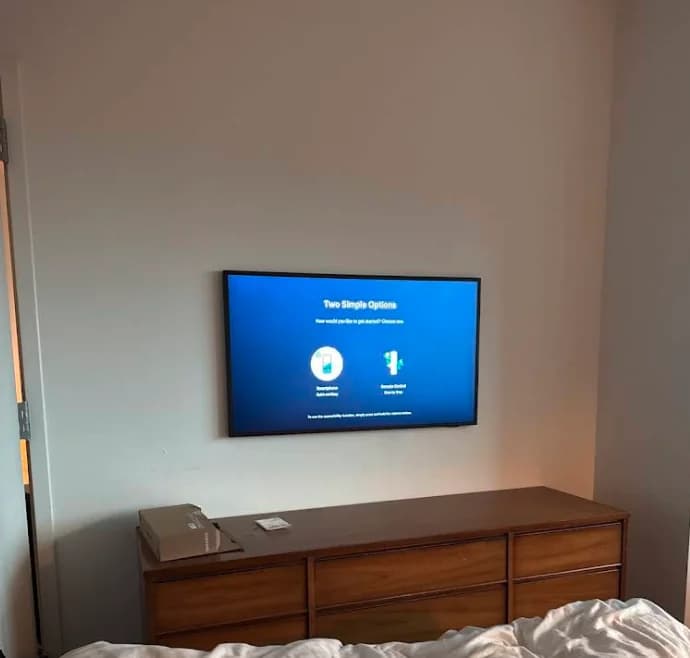
Mounting too high over a dresser in the bedroom. "Above the dresser" doesn't mean as high as possible. Bedroom TVs should be even lower than living room TVs — you're watching from a reclined position. Calculate from your eye level while propped up in bed, not while standing.
Copying a neighbor's TV height. Your neighbor might have a different couch, different TV size, different viewing distance. Their height is irrelevant to your setup.
Forgetting about glare. In NYC, window placement is not optional. A height adjustment of a few inches can sometimes reduce direct sunlight hitting the screen — especially with a south-facing window.
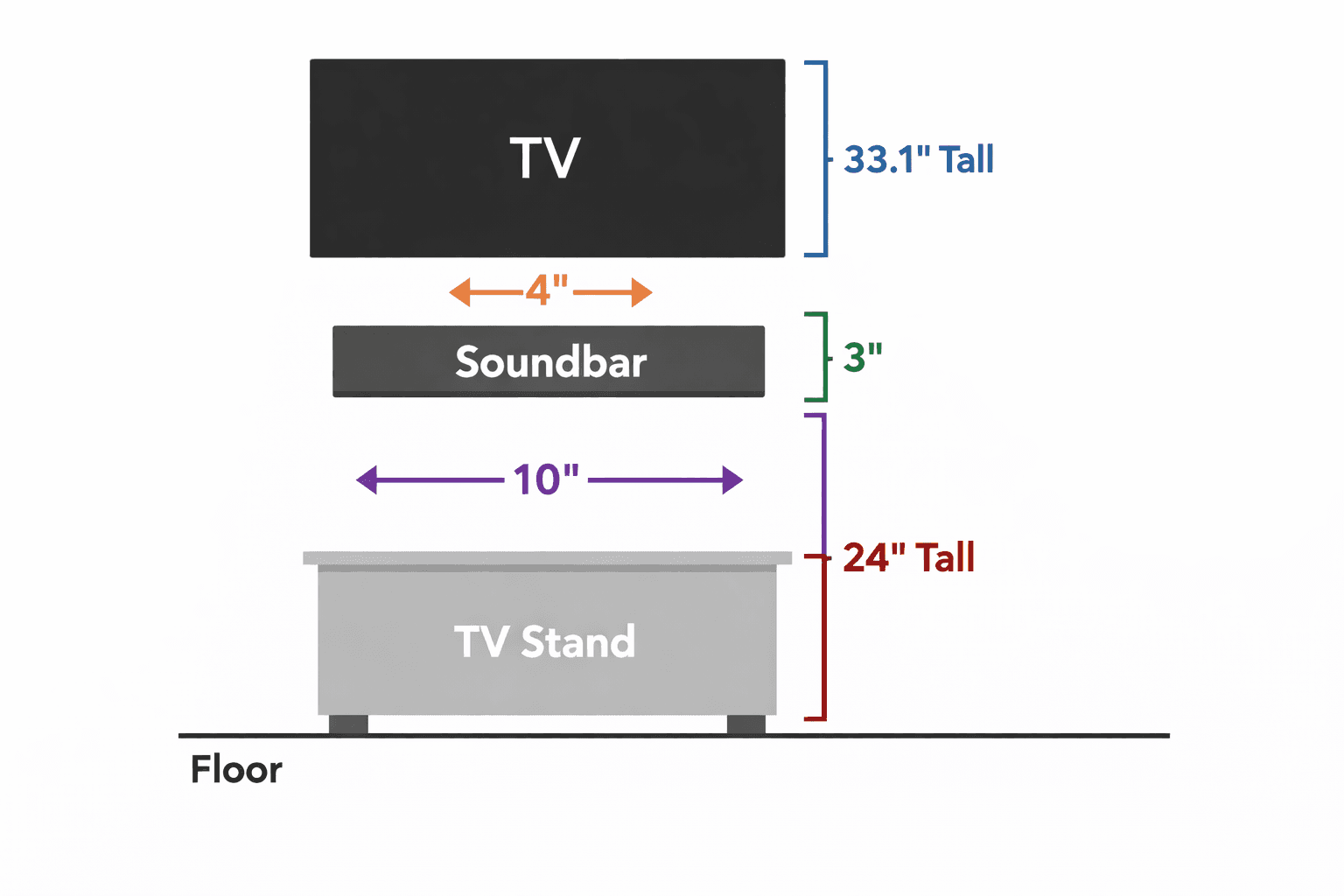
Not accounting for a soundbar. If you're adding a soundbar below the TV, factor in its height (usually 2.5–4 inches). Mount the TV a few inches higher so the soundbar doesn't sit awkwardly low or block a piece of furniture. See our soundbar mounting service.
When to go higher
There are legitimate reasons to mount above the "ideal" height:
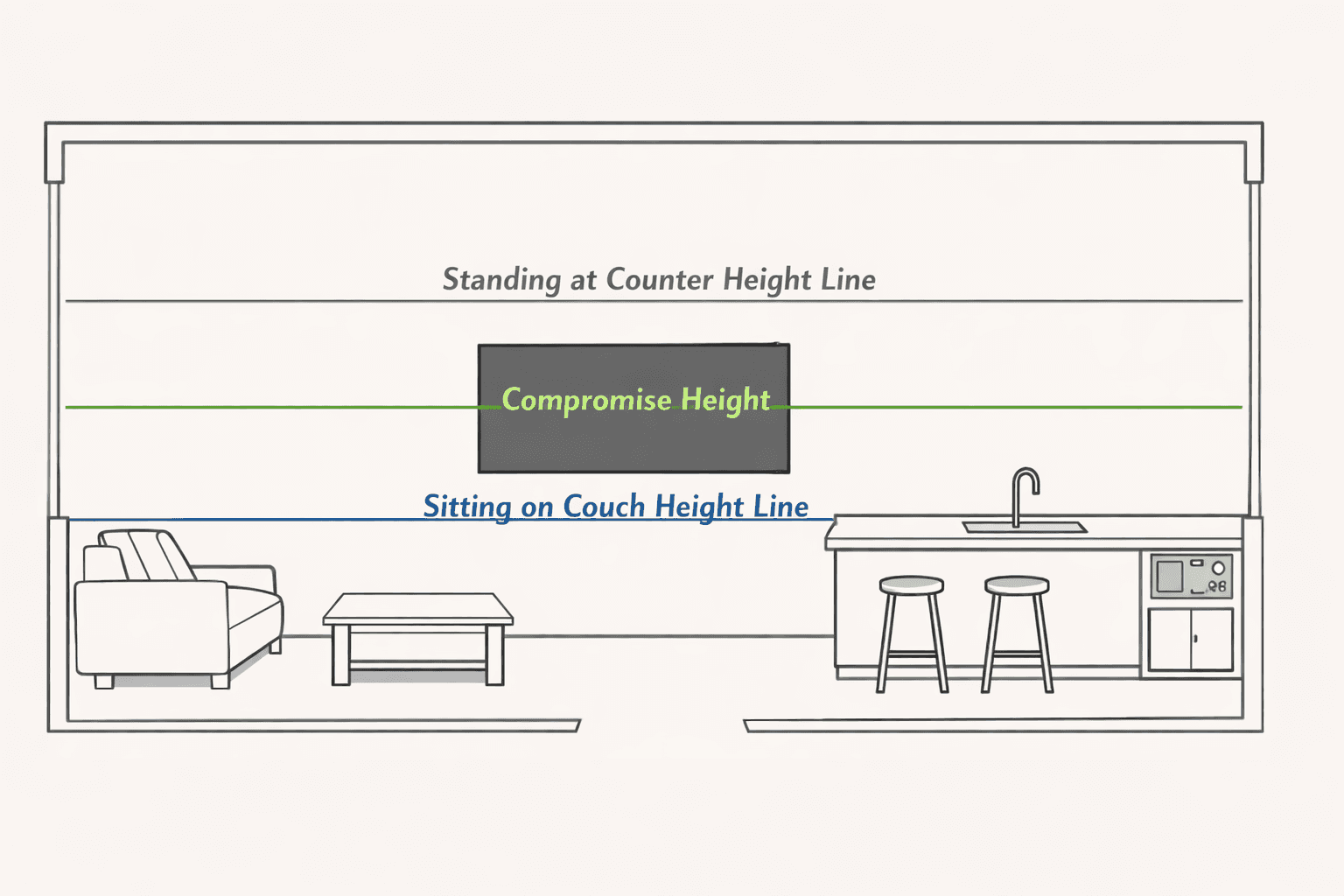
- Studio kitchens visible from the couch: a compromise height that works for both seated and standing viewing is usually 48–52 inches to center.
- Gym or standing desk setups: if you watch while on a treadmill or standing, center the TV at your standing eye level — typically 58–64 inches.
- Furniture you can't move: sometimes the apartment dictates the height. A good tilting mount can compensate for 5–8 inches of extra height. Check our recommended mounts and accessories for options that work in tight NYC spaces.
The bottom line
The "right" TV height depends on your body, your furniture, your apartment layout, and how you use the space. The 42-inch rule is a starting point at best.
Not sure what your walls can handle? Our guide on TV mounting tools for NYC apartments covers what's behind those plaster walls.
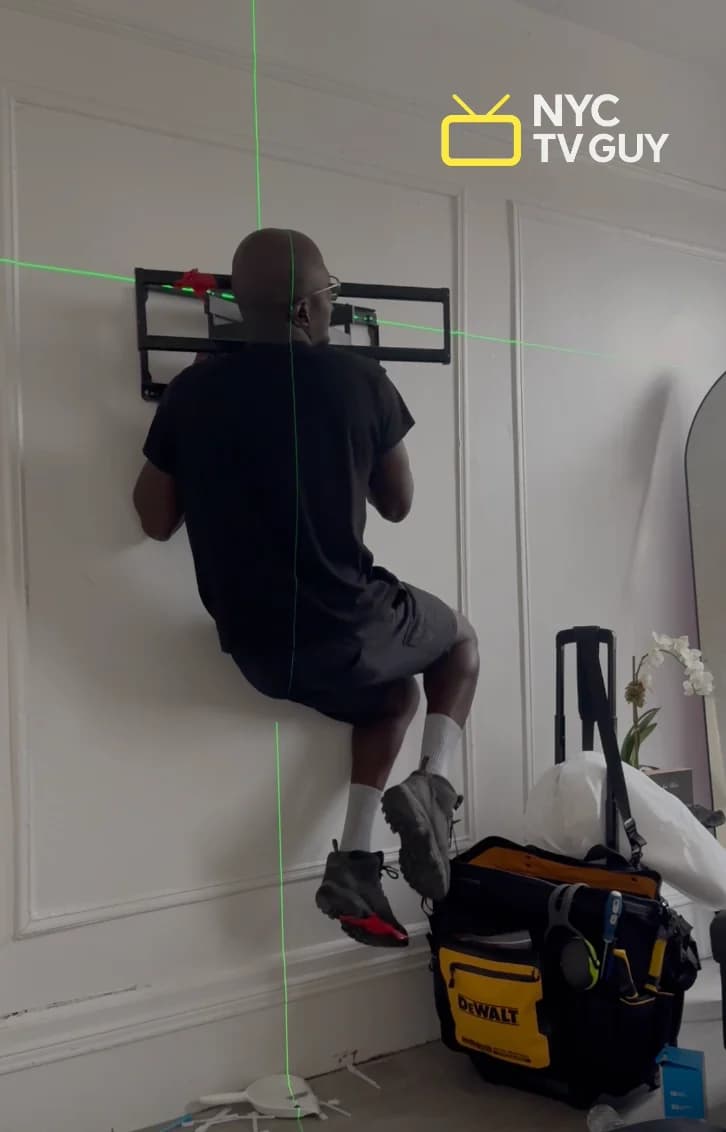
Try our TV mounting height calculator to find your ideal height in seconds. Or skip the math entirely — book your install today and we'll assess your space and mount the TV at the exact right height for your setup. It takes about 2 minutes to book.