
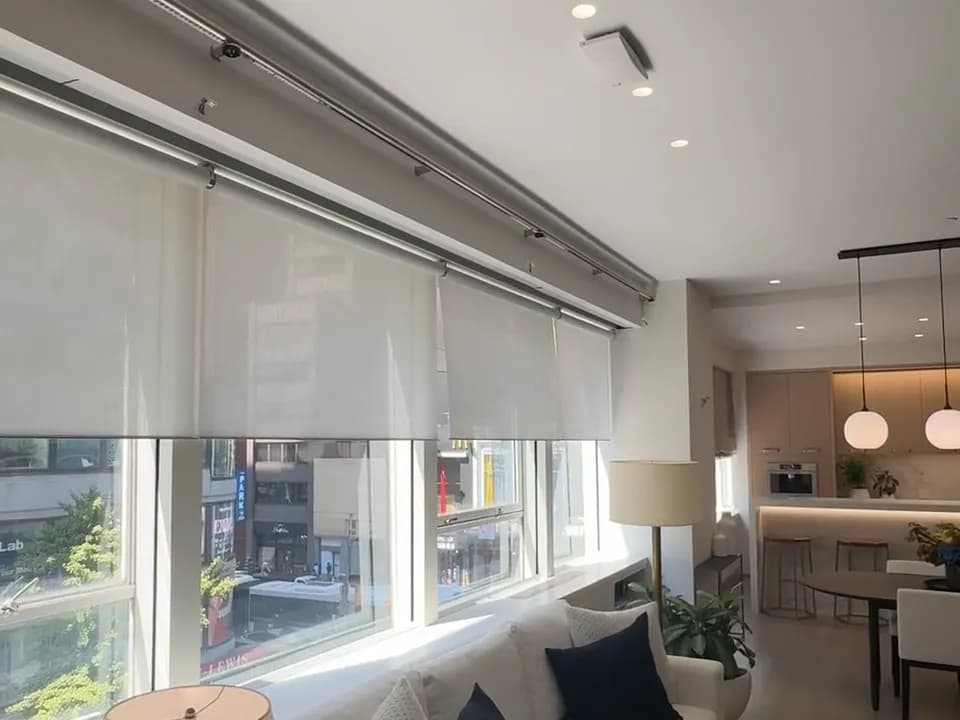
On this page
The cost of Lutron motorized shades is built from your rooms: how many windows you have, how wide they are, the fabric, how the shades get power and which Lutron system runs them. Our Lutron lighting and shades projects start from $4,000, and we give you a full quote after a site visit.
What owners on Reddit say
“The shades have exceeded all my expectations. I knew I am getting an 'entry level' product, yet my wife and I cannot believe how fast and quiet the motors are.”
— one Caséta shade owner, r/Lutron (thread)
“Smart shades really are a game changer”
— one smart-home owner, r/HomeKit (thread)
“I've used Caseta for years and love how reliable and rock-solid it is. Never had issues with it, and I’m very familiar with the setup.”
— one Caséta owner, r/HomeKit (thread)
Owners keep coming back to two things: fast, quiet motors and a system that just works.
Want that in your own home? We plan the system, measure the windows and install the shades in one project. See Lutron lighting and shades, or send us your request.
What actually moves the price
Lutron does not print one price for a motorized shade. The number is built from your rooms. Here is what shapes it.
1. How many windows, and how wide
Each window gets its own shade and its own quiet motor. More windows means more shades, and the width decides which shade line fits.
Lutron states these width ranges for its roller shades:
- Caséta shades: from 22 inches to 8 feet.
- Serena shades: from 19 inches to 8 feet.
- Triathlon shades: from 19 inches to 12 feet.
- Palladiom shades: from 20 inches to 12 feet.
- Sivoia QS shades: from 17.5 inches to 18 feet.
New York lofts and new builds often have wide windows. Up to 8 feet, Caséta and Serena cover them. Past 8 feet, pick Triathlon or Palladiom (up to 12 feet) or Sivoia QS (up to 18 feet). We measure every window on the site visit and match each one to the line that fits.
2. The fabric
The fabric sets how much light comes through. Lutron offers the same kinds of fabric across its shade lines:
- Sheer: the most light and the most view. Good where glare is the issue.
- Light filtering: soft, even daylight with privacy. The usual pick for a living room.
- Blackout: blocks light almost completely. The pick for a bedroom.
- Honeycomb (cellular): pleated fabric with air pockets, for a little extra insulation at the window.
Lutron says Serena alone comes in more than 40 fabric choices. You can also pair a sheer shade and a blackout shade on the same window, so you choose daylight or darkness with one tap. A heavier fabric, a wider shade or a double shade each add to the project. We check the window depth for a double shade on the site visit.
3. How the shades get power
This choice shapes both the cost and the install.
- Battery shades (Caséta, Serena, Triathlon). No wire to the window. The shade mounts on its own bracket and runs on batteries. Lutron says the D-cell batteries in Triathlon shades last "three to five years", and its Battery Boost option stretches that to up to 6 years on shades 38 inches and wider.
- Wired shades (Sivoia QS, Palladiom). Each shade has a wire run inside the wall or ceiling, so there is never a battery to change. Palladiom is Lutron's premium design line, with the exposed-roller look.
Battery shades need fresh batteries every few years, while wired shades never do. Battery shades suit a finished apartment. Wired shades suit a renovation, when the walls are already open.
4. Which Lutron system runs them
The system decides how you control your shades: a Pico remote, a keypad, the Lutron app, a voice assistant or a schedule. More on this choice in the next section.
5. Your building
Plaster walls, deep window wells, a co-op board's rules, an elevator booking: every building has its own details. We note each one on the site visit and build it into the quote, so you know the full scope before anything is ordered.
Caséta or RadioRA 3: which one do you need?
Both run on Lutron's own radio signal, called ClearConnect, not your home WiFi. Lutron says Caséta keeps working even when the internet goes down.
Caséta is Lutron's entry system. Lutron says each control sets up in under 15 minutes. A small plug-in hub connects the system to the Lutron app and to voice assistants. It suits an apartment, a few rooms, or a first step. One owner who chose it put it simply:
“I did check out higher end models from showroom, but the Caseta more than satisfies our requirements.”
— one Caséta shade owner, r/Lutron (thread)
Lutron says Caséta supports up to 75 devices, and every shade, dimmer and remote counts as one. For a whole house, pick RadioRA 3.
RadioRA 3 is the step up. Lutron calls it "personalized, pro-installed, wireless whole-home control". Lutron says one system supports up to 400 devices. You get the Sunnata keypads and dimmers, scenes that set every light and shade in a room with one tap, and schedules tied to the real sunrise and sunset at your address. A professional designs and programs RadioRA 3, so the quote covers design and programming time as well as parts.
HomeWorks is Lutron's largest residential system, built for very large homes; Lutron says one system covers 50,000+ square feet. For apartments and townhouses, Caséta and RadioRA 3 cover what you need, and those are the systems we install.
Each of these works with Amazon Alexa and Apple Home (HomeKit). Lutron also links its scenes with Sonos, so one button can lower the shades, dim the lights and start the music.
“HomeKit integration works 100% of the time, which is why we pick Lutron”
— the Caséta shade owner quoted above, r/Lutron (thread)
What that means on a New York wall
New York apartments come in every shape. Here is how we plan for the walls you have.
- Prewar plaster. Battery shades (Serena or Triathlon) mount without opening the plaster. Wired lines fit best when the walls are open for a renovation.
- Brick and concrete. Battery shades mount on their own brackets, so no wire runs through the masonry. We fix the brackets to the window frame, the ceiling or the wall above, with anchors made for the material.
- Drywall and new builds. Wired shades (Sivoia QS or Palladiom) are a strong choice here, especially for very wide windows or a ceiling pocket for the rollers.
- Rentals. Battery shades leave the walls alone apart from the bracket screws. Check with your landlord before the install. They also sit neatly in front of the shades an apartment came with, for a blackout layer in the bedroom.
- The switch on the wall. Lutron's Caséta dimmers swap into your existing switch box, with no new wire pulled. A Pico remote runs on a coin cell that Lutron says lasts 10 years, and it can sit on a table or mount on any wall surface without wiring.
How to choose
- Pick Caséta with Caséta or Serena shades if you want a few rooms of shades and lights, your windows are up to 8 feet wide, and you want the app and voice control.
- Pick RadioRA 3 with Triathlon shades if you want the whole home on one system, you want keypads and scenes in every room, or your windows run past 8 feet.
- Pick Sivoia QS or Palladiom shades if you are renovating, the walls or ceiling are open, and you want wired shades with no batteries and the cleanest look.
- Pick blackout fabric, or a sheer and blackout pair, for a bedroom.
If you are building a cinema room, Lutron fits into the same project. See our home theatre installation page: one button dims the lights and closes the shades for a movie.
Frequently Asked Questions
How much do Lutron motorized shades cost?
It depends on the number of windows, their width, the fabric, battery or wired power, and the control system. Our Lutron lighting and shades projects start from $4,000. We give you a full quote after a site visit, once we have measured every window.
Why is RadioRA 3 quoted per project?
Because the price depends on how many rooms, keypads, dimmers and shades you need, and the time to design and program them. We quote it after a site visit, line by line, so you can see what each part of the project covers.
What is the difference between Lutron Caséta and RadioRA 3?
Caséta is Lutron's entry system for a set of rooms, and its controls are quick to set up. RadioRA 3 is professionally installed whole-home control. Lutron says one RadioRA 3 system supports up to 400 devices, and it adds the Sunnata keypads and room-wide scenes.
Can I install Lutron shades myself?
Caséta and Serena shades are made for homeowners to install. Wide windows, wired shades and RadioRA 3 systems are a professional install. We can install the shades and set up the scenes, schedules and remotes for you.
Do Lutron shades work in an older NYC apartment with plaster walls?
Yes. Battery shades (Serena or Triathlon) need no wire to the window, so the plaster stays closed. We mount them on brackets fixed to the frame, the ceiling or the wall. We check every window on the site visit before we quote.
How long do the batteries last in Lutron shades?
Lutron says Triathlon shades get "three to five years" from their D-cell batteries. Its Battery Boost option raises that to up to 6 years on shades 38 inches and wider. Pico remotes run on a coin cell that Lutron says lasts 10 years. Wired shades need no batteries at all.
Are Lutron shades quiet?
Yes. One Caséta shade owner on Reddit said they could not believe how fast and quiet the motors are. You can hear a shade move for yourself on the site visit.
Can Lutron shades and lights work with a home theatre?
Yes. In a home theatre, Lutron dims the lights and closes the shades as one cinema scene. We plan it with the rest of the room on our home theatre projects.
Ready when you are
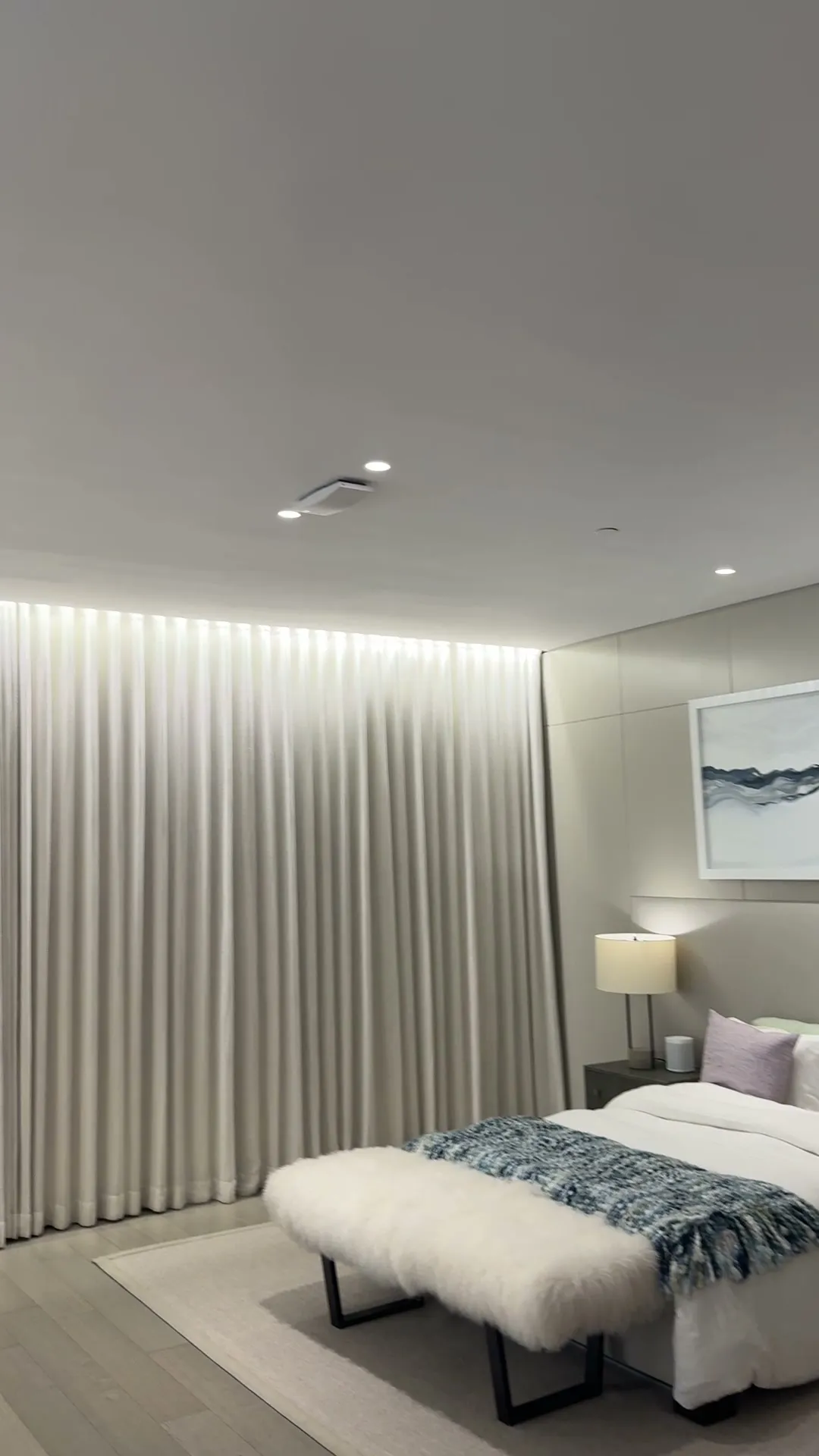
Here is how a Lutron shades project with us works.
- A clear quote. We measure every window on a site visit, then quote the shades, the system and the install line by line. Projects start from $4,000.
- Any New York building. We plan for plaster, brick, concrete and drywall, and pick the shade line that fits each window.
- Power that suits your home. Battery shades for a finished apartment, wired shades for a renovation. We show you how everything works before we leave.
- The right size of system. A few shades on Caséta, or the whole home on RadioRA 3. We start from your rooms.
We install Caséta, RadioRA 3, Serena, Triathlon, Sivoia QS and Palladiom shades across New York City.